What Are the Major Arcana?
The Major Arcana are the 22 most iconic cards in the tarot, numbered 0 to XXI. Rather than everyday details, they describe life's deeper themes: beginnings, choices, trials, letting go, hope and wholeness.
When a Major Arcana card shows up in a spread, it's often a sign that a bigger lesson sits behind the situation.
The Fool's Journey
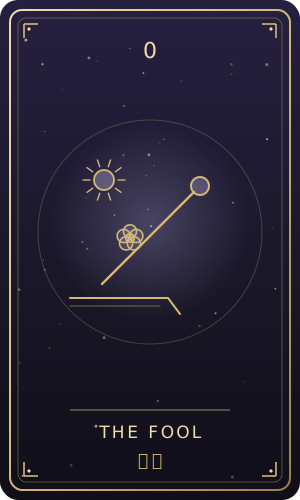
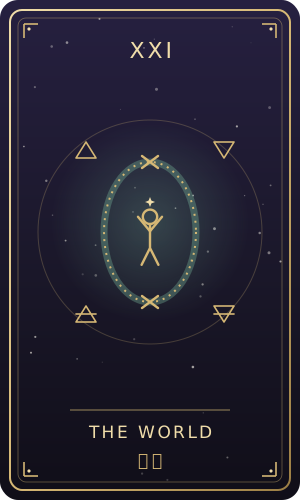
Many tarot students link the 22 cards into a single story known as the Fool's Journey. Our hero, The Fool, carries the number 0, a symbol of innocence and limitless potential. Along the way he meets each of the other cards, learns what they have to teach and finally reaches The World, completing one cycle before setting out again with new wisdom.
A popular way to study the journey is to lay out cards I through XXI in three rows of seven.
Stage One: The Outer World (I–VII)
From The Magician to The Chariot. The Fool learns to find his footing in the world: discovering his skills and intuition, receiving nurture, meeting structure and tradition, making a heartfelt choice and finally driving toward a goal.
Stage Two: The Inner World (VIII–XIV)
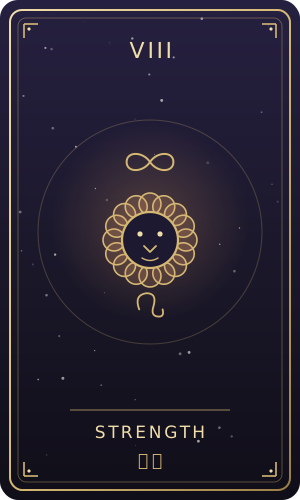
From Strength to Temperance. With outer success behind him, the Fool turns inward. He learns to guide his instincts with gentleness, seeks solitude, accepts life's ups and downs, faces cause and effect, sees things from a new angle, moves through endings and transformation, and at last finds balance.
Stage Three: Spirit and Transcendence (XV–XXI)
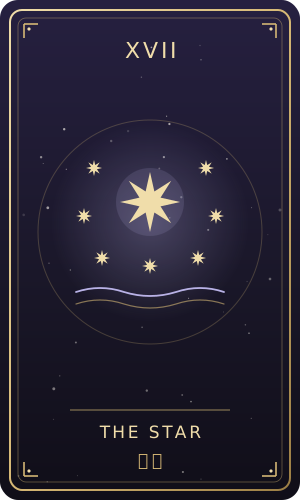
From The Devil to The World. The Fool confronts his inner chains and the collapse of false structures, then rediscovers himself through the hope of The Star, the uncertainty of The Moon and the joy of The Sun, before answering a final call to awakening and integration.
Keywords for All 22 Cards
- 0 The Fool: new beginnings, adventure
- I The Magician: action, using your resources
- II The High Priestess: intuition, inner knowing
- III The Empress: abundance, nurture
- IV The Emperor: structure, leadership
- V The Hierophant: tradition, learning, guidance
- VI The Lovers: relationships, values-based choices
- VII The Chariot: willpower, forward motion
- VIII Strength: gentle courage
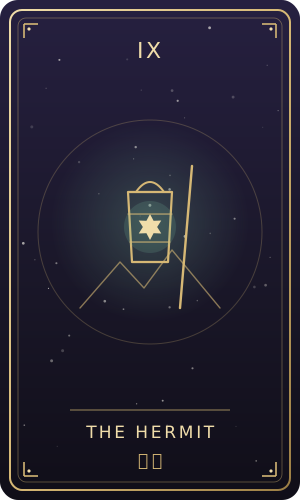
- IX The Hermit: reflection, the inner light
- X Wheel of Fortune: cycles, turning points
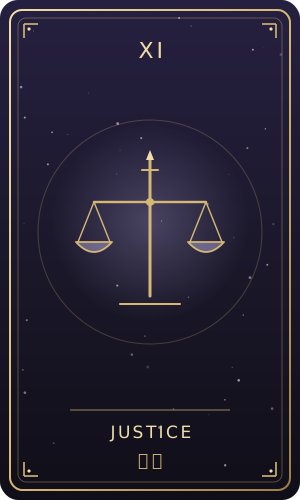
- XI Justice: fairness, cause and effect
- XII The Hanged Man: pause, a new perspective
- XIII Death: endings and transformation
- XIV Temperance: balance, blending
- XV The Devil: attachment, feeling bound
- XVI The Tower: sudden change, breaking old structures
- XVII The Star: hope, healing
- XVIII The Moon: uncertainty, the subconscious
- XIX The Sun: joy, vitality
- XX Judgement: awakening, a calling
- XXI The World: completion, integration
Why Strength and Justice Swap Places
If you compare different decks, you may notice the numbers don't always match. In the Rider-Waite-Smith deck, Strength is VIII and Justice is XI. In the older Marseille tradition it's the other way around: Justice is VIII and Strength is XI.
The switch came from the Hermetic Order of the Golden Dawn, the esoteric society Waite belonged to. To fit their astrological correspondences, they placed Strength (linked to Leo) at 8 and Justice (linked to Libra) at 11. Both numbering systems have their own logic, and ORAE Tarot follows the Rider-Waite-Smith order.
Tips for Reading the Major Arcana
- Notice the ratio. The more Major Arcana in a spread, the more significant the situation, or the more it involves forces beyond your sole control.
- Notice the position. A Major Arcana card in an "advice" position is often a life lesson worth taking seriously.
- Don't fear the "scary" cards. Death speaks of endings that make room for new life, and The Tower clears away structures that no longer serve you. Both are part of growth.
Study tip: pick one Major Arcana card each day and notice how its lesson shows up in your life. In 22 days, you'll have walked the whole Fool's Journey yourself.