The new moon is the darkest, quietest point of the cycle, when the moon is barely visible. Treat it as a reset: rather than rushing into action, ask yourself what you want to grow over the coming month. Set one or two clear intentions, like planting seeds in dark soil, and don't expect to see results yet. The Fool reminds you to start with a beginner's mind and let your plans be imperfect.
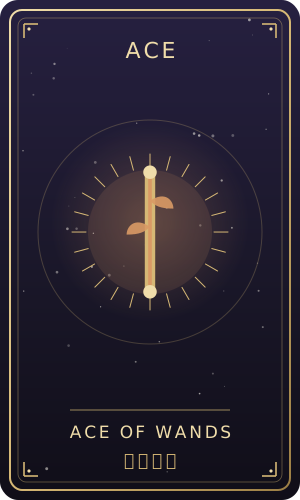
In the days after the new moon, a thin sliver of light appears in the western sky after sunset. This is when intentions begin to sprout: the enthusiasm is there, but so is the first wave of doubt. Focus on small first steps and on gathering what you need, not on instant results. The Ace of Wands, a single budding branch, is the spark you've just lit; tend it so it can grow.
At the first quarter the moon is exactly half lit, with light and shadow sharing the disc. It's a point of decision and friction: plans meet real-world resistance, which makes it a good time to adjust course and recommit. The Chariot asks you to pull scattered energy into a single direction and move forward with will and discipline, while staying clear about where you're actually headed.
The waxing gibbous moon is more than half lit but not quite round. This is a phase for refining: the direction is mostly set, and what's needed now is patience, practice and attention to detail. Instead of worrying that you aren't doing enough, look for what could be fine-tuned. The Eight of Pentacles shows a craftsperson absorbed in their work, a reminder that steady repetition is how things ripen.
At the full moon the whole disc is lit, the brightest point of the cycle. Many people notice feelings running high around now, and the effort of the past two weeks becomes easier to see. It's a time for harvest and acknowledgement, and also for release: notice what has taken shape and what you can let go. The Moon card adds a gentle caution: feelings are real, but they aren't always facts, so give yourself time to tell one from the other.
After the full moon, the light begins to shrink night by night. The waning gibbous is a time to digest and share: sort through what this cycle has taught you, thank the people who helped and pass on what you've learned. A harvest doesn't have to be a tangible result; a new insight counts too. The Six of Pentacles shows giving and receiving in balance, a reminder to keep some for yourself as you share.
At the last quarter the moon is half lit again, but this time the light is on the other side and fading. It's a moment for reassessment and choice: what still deserves your energy, and what has already done its job? The Eight of Cups shows a figure walking away from neatly stacked cups under the moon. Turning away isn't failure; it saves your heart for what matters more.
The waning crescent is the last thin sliver before the new moon, usually visible only in the eastern sky in the early morning. It's the closing chapter of the cycle, better suited to rest, solitude and tidying up than to launching anything new. Let yourself slow down, clear out built-up fatigue and mental clutter, and make room for the next new moon. The Four of Swords shows a knight lying still in quiet repose: rest is part of the preparation.