Different Decks, Different Languages
Browse any bookshop or online store and you'll find tarot decks, oracle decks, Lenormand cards and even I Ching card sets. They all seem to work the same way: shuffle, draw, look at the pictures. Underneath, though, their structure, origins and reading styles are quite different. Knowing the differences isn't about ranking them. It's about choosing the tool that best fits the question in front of you.
Tarot: A Fixed Symbolic System
Tarot first appeared in fifteenth-century Italy as a card game, and only from the late eighteenth century did it become widely used for divination and contemplation. The most common modern deck, the Rider-Waite-Smith, was first published in 1909 and has 78 cards:
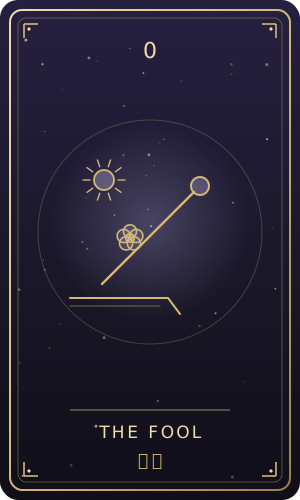
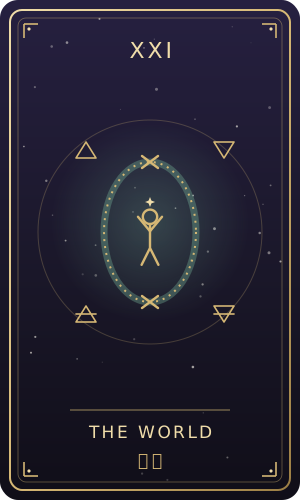
- 22 Major Arcana tracing life's big lessons, from The Fool to The World.
- 56 Minor Arcana in four suits, Wands, Cups, Swords and Pentacles, covering everyday life.
Because the structure is fixed, different tarot decks share the same core meanings and number symbolism. Tarot shines with open questions such as "Why is this happening, and what can I do?" A layout like the Celtic Cross breaks a situation down into its past, its obstacles, its hidden influences and its likely direction.
Oracle Cards: Every Deck Is Its Own World
Oracle decks have no standard format. One might have 36 cards, another 44 or 52, themed around angels, animals, plants, goddesses or affirmations. The creator defines what each card means, often printing a short message right on its face.
Oracle readings tend to be gentle and direct, like a note for the day, which makes them lovely for daily draws and self-care. That freedom has a trade-off: what you learn from one oracle deck rarely carries over to another.
Lenormand: Cards That Form Sentences
Lenormand cards grew out of a German parlour game published around 1799 and later borrowed the name of Marie Anne Lenormand, a celebrated French fortune-teller. A standard deck has 36 cards with very concrete images: the Rider, the Ship, the House, the Tree, the Clouds, the Snake, the Clover and so on.
Reading Lenormand is a little like building sentences. The first card acts as the subject and the next one describes it, so Ship + House might suggest a move or a journey home. Lenormand leans toward concrete, everyday events, with less psychological depth than tarot. Its fullest layout, the Grand Tableau, lays out all 36 cards at once.
The I Ching: An Ancient Classic of Change
The I Ching, or Book of Changes, is one of China's oldest classics: a divination text that also shaped Confucian and Taoist thought. Broken (yin) and solid (yang) lines form eight trigrams, which pair up into 64 hexagrams of six lines each, every one with its own judgment and line texts. Traditionally a hexagram was cast with yarrow stalks; today many people toss three coins six times.
The I Ching is concerned with timing and change: what stage a situation has reached, where it's heading and how to act appropriately right now. Changing lines produce a second hexagram that shows the direction of change. Its language is terse and poetic, and it rewards slow study alongside a good commentary.
Temple Practices in Taiwan
In Taiwan, many people facing uncertainty visit a temple. In jiaobei, two crescent-shaped moon blocks are dropped before a deity. One flat side up and one rounded side up is shengjiao, a "holy" yes. Two flat sides up is xiaojiao, a "laughing" result often taken to mean the question needs to be clearer. Two rounded sides up is yinjiao, a no or "not now". In qiuqian, you draw a numbered bamboo stick, confirm it by casting the blocks, then read the matching fortune poem, sometimes with help from temple volunteers.
These are religious practices rooted in folk faith and centred on a sincere conversation with the gods, which is a different starting point from a symbolic system like tarot. We mention them because they are many Taiwanese people's most familiar way of seeking guidance, and they deserve understanding and respect.
Which One Fits?
- To understand yourself or untangle a complex situation: tarot.
- For a gentle message each morning: oracle cards, or a single-card tarot draw.
- To follow concrete, everyday events: Lenormand.
- To reflect on timing, and on when to advance or hold back: the I Ching.
A quick note: ORAE uses only the 78 cards of the Rider-Waite-Smith tradition and generates readings with transparent rules. Whatever tool you choose, treat it as a mirror for reflection; important decisions remain yours to make.