Elements: The Hidden Grammar of Tarot
The idea of four elements, Fire, Water, Air and Earth, comes from ancient Greek philosophy, which saw them as the building blocks of the world. In the late nineteenth century, the Hermetic Order of the Golden Dawn wove the elements, astrology and tarot into a single system, and the Rider-Waite-Smith deck inherited that framework. Understanding the elements is like learning the grammar of a language: you don't just know what single cards mean, you start to see how they interact.
The Character of Each Element
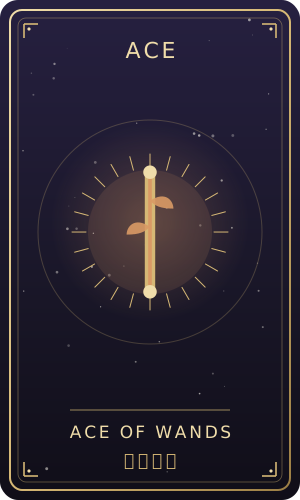
Fire: Wands
Fire is the energy of passion, will and creation. It burns upward, full of life, bringing drive and courage. In excess it becomes impulsive and impatient, and it can burn itself out.
Water: Cups
Water is emotion, intuition and connection. It flows, embraces and seeps into the deepest places. In excess it floods, and the boundaries between people start to blur.
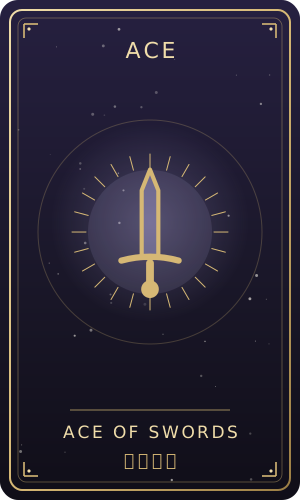
Air: Swords
Air is thought, language and judgment. It's quick, clear and analytical. In excess it overthinks, speaks too sharply or loses touch with feeling.
Earth: Pentacles
Earth is the material world, the body and stability. It's grounded, patient and focused on results. In excess it turns stubborn or stagnant, clinging too tightly to security.
The Major Arcana Have Elements Too
In the Golden Dawn system, the Major Arcana also carry elemental and astrological associations. A few examples:
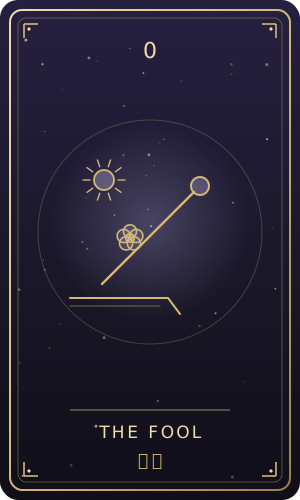
- The Fool is linked to Air: freedom, lightness and the unknown.
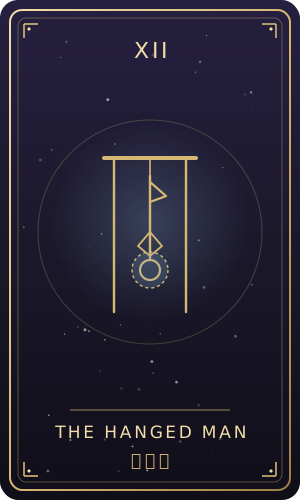
- The Hanged Man is linked to Water: surrender, and seeing from a new angle.
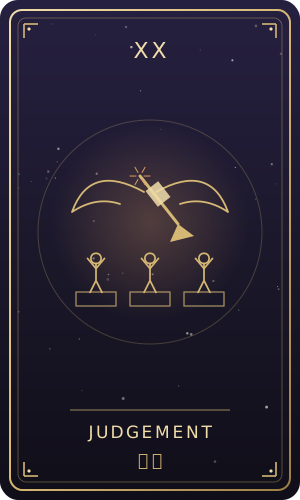
- Judgement is linked to Fire: awakening and the call to renewal.
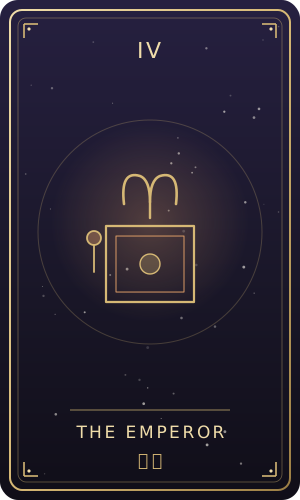
- Many others connect to an element through their zodiac sign. The Emperor is tied to Aries (Fire), and The Chariot to Cancer (Water).
How Elements Interact
When cards sit side by side in a spread, their elements influence one another. This technique is known as elemental dignities, and its basic principles look like this:
- Same element: the cards strengthen each other, and the energy becomes more pronounced.
- Supportive elements: Fire and Air feed each other (air makes fire burn brighter), while Water and Earth nourish each other (water makes soil fertile).
- Opposing elements: Fire and Water, and Air and Earth, pull against each other. They may weaken each other's expression or point to an inner conflict.
- Neutral pairs: Fire with Earth, and Water with Air, have a milder effect. Each keeps its own character, and some systems treat these pairings as mildly friendly.
For example, if the Ace of Wands sits next to Swords cards, the new idea gets backing from clear thinking and can be put into action efficiently. Surround it with Cups instead, and the enthusiasm may be dampened by mixed feelings or hesitation.
Quick tip: elemental dignities are a helpful lens, not a rigid rule. Read each card on its own first, then use the elements to sense how energy moves through the whole spread.
Scanning a Spread by Element
When reading a full spread, try counting how many cards of each element appear:
- One element dominates: that area of life is the center of the situation.
- One element is missing: it may be something you're overlooking. If you ask about love and there's no Water at all, practical reasoning might be drowning out your real feelings.
- Opposites face off: this can reflect an inner tug-of-war, such as wanting to take a risk (Fire) while fearing emotional hurt (Water).
Elements in Everyday Life
The elements can also become gentle, practical reminders. Too much Fire in a spread? Maybe it's time to slow down. Plenty of Water? Try journaling to give your feelings some shape. Lots of Air? Step away from the screen and move your body. Heavy on Earth? Add a little novelty or adventure to your routine.
Elemental reading pairs beautifully with Number Symbolism, letting you see both which area of life is involved and what stage it has reached. For court cards, elements are a key to personality; see The Court Cards.