What Are the Court Cards?
Each suit has four court cards: Page, Knight, Queen and King, for 16 in total. Unlike the number cards, which depict events, the court cards depict people. That's exactly why they puzzle so many beginners: is this card about someone else, or about me?
Four Ranks, Four Levels of Maturity
It helps to think of the four ranks as stages of growth within one area of life:
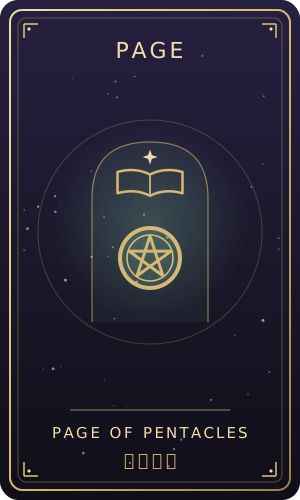
- Page: the student and the messenger. Curious, sincere and eager to learn, a Page can also bring news or a fresh opportunity.
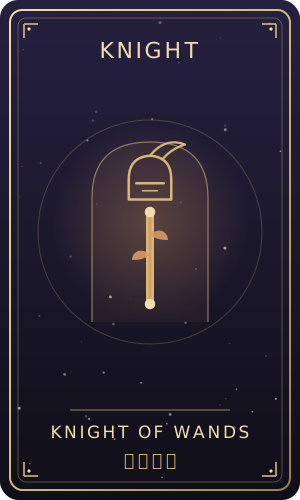
- Knight: the doer. Fully committed to a goal and charging after it, sometimes to extremes or a little rashly.
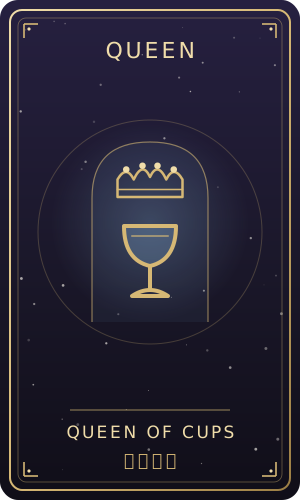
- Queen: inner mastery. Mature and receptive, she nurtures through understanding and emotional insight.
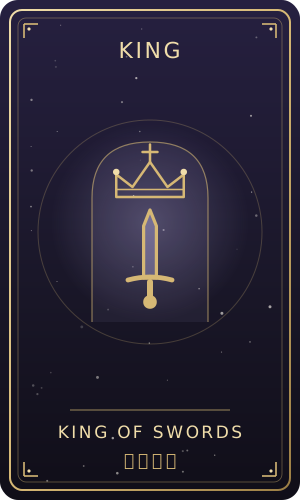
- King: outer mastery. Steady and responsible, he guides and decides through experience and authority.
Both Queens and Kings represent maturity. The difference is that a Queen's power tends to be inward and receptive, while a King's is outward and directive. Neither is "higher" than the other, and neither is tied to anyone's actual gender.
Rank + Suit: 16 Personalities
Combine a rank's qualities with a suit's area of life and each court card comes alive:
- Knight of Wands: the passionate adventurer who's out the door before the plan is finished.
- Queen of Cups: the gentle, intuitive listener with deep empathy.
- King of Swords: the clear-headed, fair-minded decision-maker.
- Page of Pentacles: the grounded student diligently learning a new skill.
Many tarot systems also assign elements to the ranks. One common modern pairing is Page = Earth, Knight = Air, Queen = Water and King = Fire, but systems disagree (some make Knights Fire and Kings Air instead). Don't get stuck on this as a beginner; the rank and the suit already tell you most of what you need.
Three Ways to Read a Court Card
1. A Person in Your Life
A court card may point to someone who embodies its qualities. In a work reading, the King of Swords might describe a sharp, rigorous manager.
2. Your Own Attitude
It can also describe how you're approaching the situation, or the attitude the cards suggest you adopt. Drawing the Knight of Wands as advice might be an encouragement to act boldly.
3. An Event or Message
Pages often show up as news, invitations or a chance to learn, while Knights can describe things moving quickly, or travel and movement.
How to tell which applies: look at the position and your question. In an "other person" or "external influences" position, a court card is more likely to be someone else. In an "advice" or "self" position, it's usually an attitude you can try on.
Reversed Courts and Crowded Courts
A reversed court card often shows that person's qualities out of balance, either overused or underused. The Knight of Wands reversed might be enthusiasm tipping into recklessness, or a spark that just won't catch. The Queen of Cups reversed could describe someone absorbing everyone else's feelings while neglecting her own needs.
When several court cards appear in one spread, the situation usually involves many people's opinions and roles, or you may be juggling a few different hats in your own life.
Don't Match by Appearance
Traditionally, some readers matched court cards to age, gender or looks: Queens were always women, Kings were always older men. Modern readings focus on qualities and energy instead. Anyone can show a Queen's warmth or a King's decisiveness.
A Simple Practice
Pull the 16 court cards from your deck and go through them one by one, asking, "If this card were a person, who do I know who's like this?" You'll soon discover that the court is a cast of vivid characters. Once they feel familiar, revisit them alongside The Four Suits and The Four Elements to give each personality more depth.