✦ Love
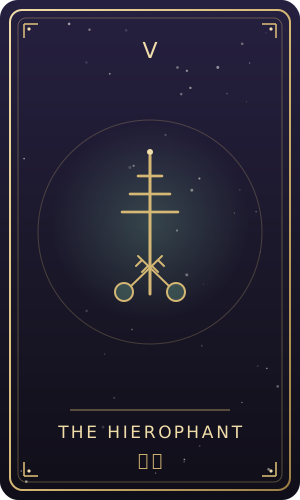
The Hierophant in Love
Upright
In love, the Hierophant points to commitment and shared values, sometimes marriage, meeting the family or meaningful rituals. Single? You may meet someone through friends, a community or a class. Common beliefs give the relationship a sturdy foundation.
Reversed
Reversed, family expectations, traditional ideas or differing values may be putting pressure on your relationship. Or you may want to do things unconventionally. What matters most is honest conversation and creating a way of being together that is truly yours.
Single & new love
Upright
Your next serious relationship may come through an introduction from friends or family, or a community you're already part of. Stay open to being set up; someone who shares your core values is often the person who goes the distance.
Reversed
Reversed, don't push yourself into a relationship because you feel you 'should' be with someone by now or because family is pressing. You might also be tired of conventional dating and ready to meet people differently; trust your own pace.
In a relationship
Upright
The Hierophant brings commitment and ritual, and important milestones such as an engagement, a wedding or meeting the family may be on the horizon. Creating your own small traditions, like a standing date night, deepens your sense of belonging together.
Reversed
Reversed, you may differ on family expectations, faith or lifestyle, or the relationship feels boxed in by what others think it should be. Instead of living by someone else's rulebook, sit down together and write your own.
Reconciliation
Upright
For reconciliation, the Hierophant suggests a trusted mutual friend, family member or counselor could help you both communicate. If the split came from immaturity and you're both now ready to learn and commit, a fresh start is possible.
Reversed
Reversed, the barrier may be a fundamental clash of values or pressure from family and circumstance. Before deciding anything, consider whether those issues have truly changed, rather than relying on feelings alone to carry you through.
In key spread positions
- As the outcome
- Upright:In the outcome position, the Hierophant shows things being settled in a formal, recognized way: a signed agreement, a commitment or an earned qualification.
- Reversed:The outcome may see you choosing your own path or rubbing against established systems; a new direction means taking full ownership of it.
- As the obstacle
- Upright:The challenge is over-reliance on rules or concern about what others think, which stops you from making a choice that's genuinely your own.
- Reversed:The block is a clash of values, rigid dogma, or rebellion that dismisses the useful wisdom of those who came before.
- As advice
- Upright:Consult a trusted mentor or professional, learn step by step and respect the processes that already exist for good reason.
- Reversed:Examine which rules actually fit you. Keep what's valuable and have the courage to release what no longer matches what you believe.
Advice:Seek counsel from a trusted mentor or experienced guide, and let structured study and practice become a solid foundation beneath your choices.
FAQ
Does the Hierophant mean marriage?
Because the Hierophant is tied to commitment, ritual and tradition, it often appears in love readings as a sign of engagement, marriage or meeting the family. Its deeper message, though, is about shared values and a relationship that's publicly recognized. Alongside cards like the Lovers or the Ten of Cups, the marriage theme grows stronger.
What does the reversed Hierophant mean?
Reversed, the Hierophant often reflects questioning tradition, wanting to break the mold, or feeling trapped by rigid rules and other people's expectations. That isn't necessarily negative; it can be the start of defining your own values. The key question is whether you're seeking what truly fits you or simply pushing back.
Is the Hierophant a good card for studying or exams?
Upright, it's a strong card for learning: formal courses, certifications, apprenticeships and structured study all tend to pay off when approached step by step. Reversed, it suggests conventional methods may not suit you right now, and self-directed or more flexible learning could work better.