Your First Deck: Comfort Comes First
Shopping for your first tarot deck can feel overwhelming. The good news is that beginners don't need the rarest or most expensive edition. What you need is a deck you can understand, that feels good in your hands, and that you'll actually want to pick up every day.
Full disclosure: ORAE has no sponsorship from any deck publisher or brand, and this article contains no affiliate links. Everything here is general guidance.
Five Things to Look For
1. Imagery Based on Rider-Waite-Smith
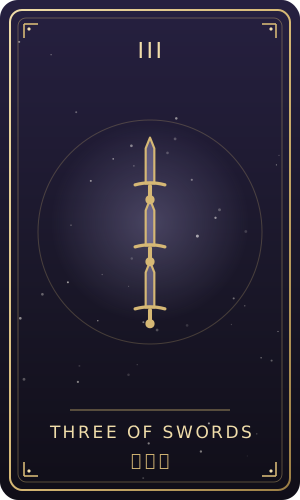
We recommend starting with the Rider-Waite-Smith (RWS) deck or one closely based on it. Most tarot books, courses and websites, ORAE included, use its symbolism. Just as importantly, every card in its Minor Arcana shows a full scene. The Three of Swords, for example, shows a heart pierced by three swords, so you can work out the meaning from the picture alone. Some historical decks show only suit symbols on their number cards, which suits more experienced readers.
2. Card Size
A standard tarot card measures roughly 7 × 12 cm (about 2.75 × 4.75 inches). If you have smaller hands and find shuffling awkward, a mini or pocket edition may help, though tiny cards make the details harder to see.
3. Guidebook
Most decks come with a slim booklet, often called the "little white book". If English isn't your most comfortable language, check whether a translated guide is available. Treat the booklet as a starting point, and pair it with Tarot Basics and the individual card pages for a fuller picture.
4. Borders
Bordered cards usually carry the card's name, and wear along the edges shows less. Borderless cards give you more artwork but often no title, so expect to spend a little longer learning to recognise each card.
5. Colour and Feel
Even within the RWS family, colour varies widely. Some editions keep the soft, slightly vintage palette of the 1909 original; others use bright, saturated modern colours. Also notice the card stock's thickness, whether the finish is matte or glossy, and whether the back design is symmetrical. If you plan to read reversed cards, a symmetrical back stops you from spotting reversals while you shuffle.
Common Edition Types
- The original Rider-Waite-Smith: published in London in 1909, conceived by A. E. Waite and illustrated by Pamela Colman Smith. Many editions today are reprints based on early printings.
- The Smith-Waite Centennial edition: released to mark the deck's hundredth anniversary, it aims to recreate the muted colours and hand-drawn lines of early printings, and its name puts the artist, Pamela Colman Smith, front and centre.
- Modern RWS-based decks: these keep the RWS compositions and symbols but bring new art styles, characters or colour schemes. As long as the core compositions match, most of what you learn carries over.
A Note on Image Rights
The original 1909 images are in the public domain in many countries, but later recoloured or redrawn editions may still be protected by copyright for their new work, and some deck names are registered trademarks. The cards you see on ORAE are original illustrations that follow the RWS structure; see our image license for details.
Storing and Cleansing: Optional Rituals
- Storage: keep your cards in a pouch or box, out of direct sunlight. In humid climates like Taiwan's, a desiccant packet or a dry cabinet helps prevent warping.
- Cleansing: some people knock on the deck, put the cards back in order, or use moonlight or sound for a "fresh start". These are personal rituals that can help you shift your mindset, but none of them is required. If you use smoke, keep the room ventilated and handle fire safely.
- About gifted decks: the saying that your first deck must be a gift is simply folklore. Choosing a deck you love for yourself is perfectly fine.
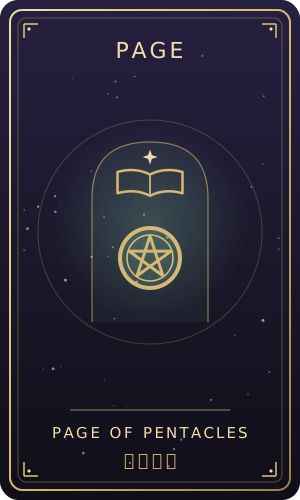
Still undecided? Practise with a single-card reading on ORAE first. Once the 78 cards feel familiar, choose a deck that truly suits you, and start learning like the Page of Pentacles: one steady step at a time.