An Honest Answer First
If "accurate" means predicting the future with certainty, the honest answer is that there's no reliable scientific evidence that tarot can foretell specific events. That doesn't make tarot worthless. Many people find their readings strikingly on point, and there are fascinating psychological reasons for that. Understanding them can actually help you use tarot more wisely.
Why Readings Feel So Accurate
Projection
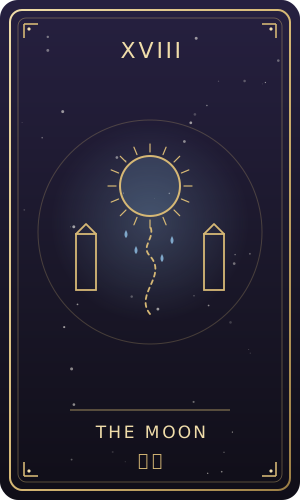
Tarot images are rich and open-ended. Look at the hazy night of The Moon and whatever you're worried about tends to surface on its own. What you "see" in a card is often something you already sensed but hadn't yet put into words.
The Barnum Effect
Psychologists have found that people readily accept vague, general descriptions as uniquely true of themselves: "You seem strong on the outside, but inside you long to be understood." Many card meanings are naturally written in broad terms, which is why different people drawing the same card can each feel it describes them perfectly.
Confirmation Bias
We tend to remember the hits and forget the misses. If one or two lines of a reading land, the whole reading can leave an impression of uncanny accuracy.
A Look at the Probability
A tarot deck has 78 cards, and with reversals each single draw has 156 possible outcomes. Draw three cards, counting order and orientation, and there are more than 3.6 million possible results. That makes any single result very hard to arrange on purpose. It's also a reminder that which card appears is random; the meaning comes from how you read it and what you do with it.
So Where Does Tarot's Value Lie?
Rather than treating tarot as prophecy, think of it as a framework for organizing your thoughts:
- It gives you fresh language for describing your situation.
- It offers a safe space to name what you really care about.
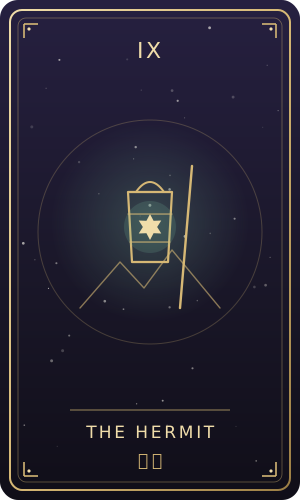
- It nudges you toward possibilities you'd overlooked. The Hermit, for example, invites you to pause and look inward before acting.
A practical test: after a reading, ask yourself, "What do I know now that I didn't before, and what am I going to do?" If you can answer, the reading was worthwhile.
Why ORAE Insists on Fairness and Transparency
Precisely because tarot is so open to psychological influence, we believe the tool itself should be honest:
- Fair draws. Every reading is shuffled with cryptographically secure randomness. Before you draw, the screen shows a hash of that reading's random seed, a commitment that locks in the shuffle in advance, so results can't be predicted or manipulated. Neither your question nor your account status affects which cards appear.
- Transparent rules. Interpretations don't use AI. They're assembled from a human-written database of card meanings by a fixed set of rules, so the same card in the same position always reads the same way. Every reading also records the meaning and rule versions it used.
None of this turns tarot into a prediction machine. What it does guarantee is that what you see comes from a fair, traceable draw, not from content designed to tell you what you want to hear.
Using Tarot in a Healthy Way
- Treat a reading as a prompt and a reminder, not a final verdict.
- For important decisions, combine tarot with real information and professional advice. Tarot is no substitute for medical, legal or financial guidance.
- When you use a yes/no reading, remember it shows a leaning, not a guarantee.
- For long-term trends, the Twelve Months spread works well, as long as you check back and adjust as the year unfolds.
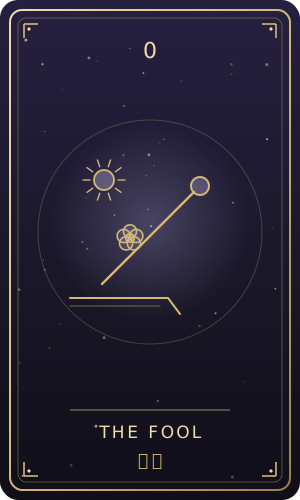
Like The Fool setting out with curiosity, stay open and stay clear-headed: that's the most comfortable way to live alongside tarot. You can explore more ideas in the Tarot Academy.