Suspecting a Third Party? Tarot, Trust and Boundaries
· 6 min read
Worried your partner is cheating and tempted to ask the cards? Tarot cannot confirm infidelity, but it can help you sort through the fear. Here is what to ask, what not to do, the trust cards and where to find support.
Your partner flips their phone face down when it lights up. They seem distracted on dates. A friend makes an offhand comment. And a question starts to grow: is there someone else? It is very common to reach for tarot at a moment like this, hoping the cards will settle it. So let's be honest about what a "third party" tarot reading can and cannot do. Tarot cannot confirm whether your partner is cheating. It can help you sort through the fear, understand what you need and plan how to talk about trust. If suspicion is keeping you up at night, we hope this helps a little.
What Tarot Can and Can't Tell You About Cheating
The most important point first: tarot cannot prove or rule out infidelity.
On ORAE, for example, every reading shuffles the full 78-card deck with secure randomness, and the question you type has no influence on which cards appear. The cards are not a record of what your partner did. They work more like a mirror for your own feelings and situation. Drawing the Seven of Swords doesn't mean someone lied; drawing the Two of Cups doesn't mean you should ignore facts that worry you. For more on what tarot can and can't predict, see Is Tarot Accurate?
What tarot can help you see:
- Where your unease is coming from, and how much is fact versus guesswork.
- What you need in this relationship, such as security, openness or feeling valued.
- How you want to raise the subject, and how you will look after yourself afterward.
Why Suspicion Makes You Want to Keep Drawing
The hardest part of suspicion is not knowing. Anxiety pushes us to grab any answer, even a single card. But anxiety also makes us notice whatever fits our fear and overlook everything else, a pattern psychologists call confirmation bias. If you draw while convinced something is wrong, almost any card can be read as evidence.
None of this means you are "overthinking." Sometimes unease comes from real changes in a relationship: less connection, commitments that have gone vague. Sometimes it comes from having been betrayed before, which makes small things today feel sharp. Both deserve to be taken seriously; they just call for different care. The first calls for a conversation, the second for gently tending an old wound.
If you find yourself drawing several times a day, or asking the same question on different sites, you probably don't need more cards. You need to steady yourself first. Our post on asking tarot the same question twice explains why repeated draws rarely help.
Boundaries: What Not to Do
When you are suspicious, the urge to "find out" can be strong. Some ways of finding out make everything worse:
- Don't treat a card as evidence. Confronting your partner with "the cards say you're lying" is unfair to both of you and shuts down real conversation.
- Don't go through their phone, track their location or log into their accounts. Accessing someone's phone, messages or accounts without consent badly damages trust and may also be against the law.
- Don't use tarot to identify "who it is." Pinning suspicion on a coworker or friend can hurt someone innocent and distracts you from the relationship itself.
- Don't confront or decide at the height of your emotions. Let yourself settle first, then decide whether and how to talk.
These boundaries aren't about putting up with things or pretending everything is fine. They are about putting your energy where you have real influence: your feelings, your needs and your choices.
Better Questions: From "Are They?" to "What Do I Need?"
| Instead of | Try asking |
|---|---|
| Is my partner cheating? | What does my unease in this relationship most need? |
| Who is the other person? | How can I raise trust in a way that will be heard? |
| Will they leave me? | Whatever happens, how can I look after myself now? |
| Should I check their phone? | What kind of openness and boundaries would help me feel secure? |
| Do they still love me? | How does this relationship feel to me right now, and what commitment do I want? |
Good questions focus on you, lead to action and don't assume the answer. See how to ask tarot questions for more.
Cards That Often Appear Around Trust: Themes, Not Verdicts
These cards show up often in readings about trust. Treat them as topics worth talking about, not as answers about what someone did.
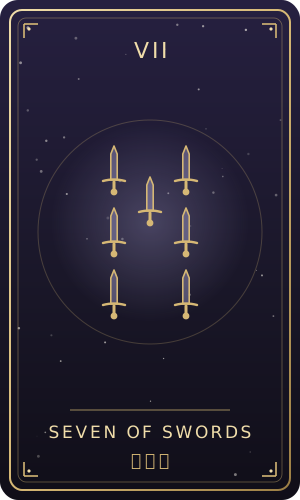
- Seven of Swords: Upright, something unspoken, a distracted partner or someone holding back. If something feels off, asking gently beats silent guessing, and it is worth asking yourself whether you are avoiding something too. Reversed, hidden things may come into the open, and it reminds you to notice whether insecurity is turning into suspicion.
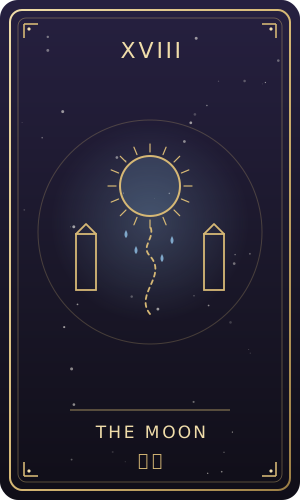
- The Moon: Mixed signals, unspoken feelings, and your own uncertainty and guesswork. Hold off on conclusions when information is thin, and notice whether past hurts are coloring the present. Reversed, misunderstandings surface and honest conversation becomes easier.
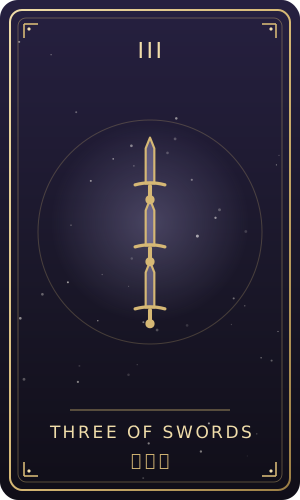
- Three of Swords: Disappointment, conflict or a painful truth. It acknowledges your heartache; give yourself time to absorb it without rushing to blame anyone.
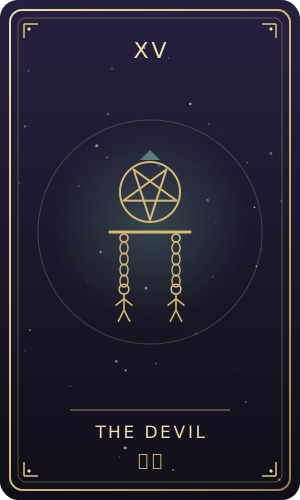
- The Devil: Strong attraction mixed with control, possessiveness, jealousy or dependency. It may point to control in the relationship or to your own insecurity. Reversed, you begin honoring your boundaries and reclaiming your autonomy.
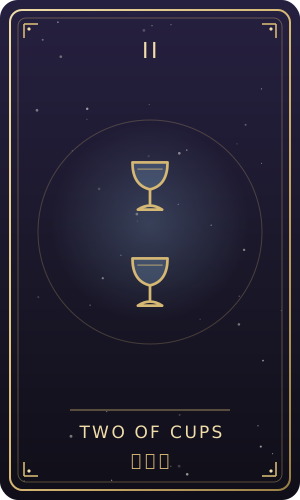
- Two of Cups reversed: Misunderstanding, coolness or uneven effort wearing you both down. Try opening with "I feel" rather than "you always."
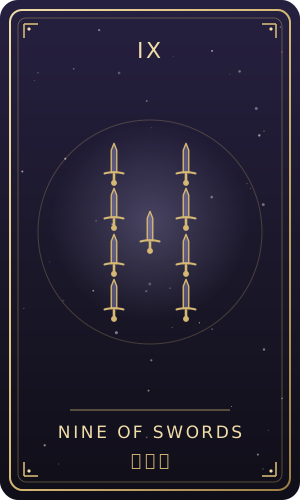
- Nine of Swords: Worry that keeps you awake, endlessly guessing at your partner's feelings. Voicing it is usually better than playing out the whole drama alone in your head.
- Three of Cups reversed: Possibly third-party issues, friends interfering too much, or one person not wanting to commit. It invites an honest talk about what commitment means to each of you, not proof that anyone strayed.
The same card can describe the relationship or the fear inside you. When one appears, ask: "Is this card describing something I've actually seen, or something I'm afraid of?"
Example: Turning the Question Back to Yourself
Fictional example: Lately, Clare's boyfriend has been working late and sending short replies, and she has started to wonder if there is someone else. Instead of asking "Is he cheating?", she uses the Strengths & Obstacles spread to ask, "How can I handle the insecurity I feel in this relationship?"
| Position | Card |
|---|---|
| Strength | Strength (upright) |
| Obstacle | Nine of Swords (upright) |
| Advice | Ace of Swords (upright) |
- Strength in the Strength position: Strength says she can meet the relationship with patience and warmth, and calm her own feelings first instead of being driven by them.
- Nine of Swords as the Obstacle: what is really holding her back is the late-night guessing and worst-case imagining. She hasn't actually said a word to her boyfriend yet.
- Ace of Swords as Advice: the Ace of Swords asks for an honest conversation, saying clearly and kindly what she has been holding in.
The reading doesn't answer whether he is seeing someone. It gives Clare a step she can actually take: at a relaxed moment this weekend, she might say, "You've been working late a lot and we've hardly talked properly. I've been feeling a bit uneasy, and I'd love to hear how you've been." Then she listens. If she still feels uneasy afterward, she knows she can talk to a friend or a counselor rather than drawing ten more cards.
How to Talk About Trust
Whatever themes the cards raise, the real work happens in conversation:
- Pick a calm moment. Avoid the middle of an argument, late at night or when your partner is busy.
- Share observations, not accusations. "I've noticed we barely talk properly lately" is easier to hear than "Are you seeing someone?"
- Name your feelings and needs. "I've been feeling insecure, and I'd like us to talk about what openness and commitment mean to each of us."
- Really listen. Give your partner room to explain, and notice how you feel afterward.
- Look after yourself afterward. Whatever happens, talk to a trusted friend or write things down.
If repeated conversations don't rebuild trust, couples counseling or individual therapy can offer real support. For love questions more broadly, see our guide to love tarot questions.
When to Reach Out for Support
Tarot can help you reflect, but it can't replace real support. Please don't carry this alone if:
- You have been sleeping or eating badly for weeks and can't focus on work or study.
- You are having thoughts of harming yourself. Contact a local crisis line, a mental health professional or emergency services.
- There is violence, threats or controlling behavior in the relationship, such as being cut off from friends, having your movements monitored, or being intimidated or hurt. Contact a domestic violence hotline or support service in your country, and if you are in immediate danger, call your local emergency number.
Being controlled or threatened is never your fault, and it isn't something a reading can fix. Your safety comes first.
Reflect Quietly on ORAE
ORAE is free, needs no account to read and uses no AI: interpretations come from hand-written meanings combined by fixed rules. To check in with yourself, start with a single card, or open a love reading and choose the Strengths & Obstacles spread to place three cards on Strength, Obstacle and Advice. When you are signed in, your reading history is visible only to you, and if you share a reading with a friend, the share link can hide your question. A reading can keep you company while you think; the real answers come from understanding what you need and from honest conversation between the two of you.
FAQ
Can tarot tell me if my partner is cheating?
No. Cards are drawn at random, and on ORAE the question you type has no effect on which cards appear, so a reading cannot prove or rule out infidelity. It is better used to sort through your worry, understand your needs and prepare to talk with your partner.
Does the Seven of Swords mean my partner is lying or cheating?
No. In love, the Seven of Swords is about things left unsaid. That might be your partner holding back, something you haven't said yourself, or insecurity turning into suspicion. Treat it as a prompt to ask gently and communicate, not as proof.
Can I ask tarot who the other person is?
It is not a good idea. Cards cannot identify anyone, and pinning suspicion on a coworker or friend can hurt someone innocent while distracting you from the relationship itself. Ask instead what would help you feel secure, or how you want to raise the topic of trust.
Should I check my partner's phone to be sure?
We don't recommend it. Accessing someone's phone, messages or accounts without consent badly damages trust and may be against the law. Choose a calm moment to share your observations, feelings and needs instead, and consider couples counseling if trust doesn't return.
Which spread is best when I suspect a third party?
Choose a spread that focuses on you, such as the Strengths & Obstacles spread, or a daily single card to steady your feelings. If you use a relationship spread, focus on your own position and the advice card rather than treating the other person's card as evidence.
When should I seek professional help?
If you have been sleeping or eating badly for a long time, or have thoughts of harming yourself, reach out to a crisis line or a mental health professional. If there is violence, threats or control in the relationship, contact a domestic violence hotline or your local emergency number.
Try a reading on ORAE
Free, no sign-up, no AI: fixed, transparent interpretation rules.