Can You Ask Tarot the Same Question Twice? Redraws and Follow-ups
· 6 min read
Didn't like the answer and want to draw again? We use real odds to show why redrawing until you like it empties a reading, when a follow-up or clarifying card makes sense, how long to wait, and how ORAE handles new draws.
You've drawn your cards, the answer isn't the one you wanted, and your finger is already hovering over "draw again." Can you ask tarot the same question twice? It's one of the most common questions people have when they start reading. The short answer: you can ask again, but it's best not to keep drawing until you like what you see. This post looks at redrawing from two angles, probability and psychology, separates legitimate follow-ups from answer-shopping, suggests how long to wait, and explains how ORAE handles new draws. For the wider question of whether tarot is accurate at all, start with Is Tarot Accurate?
The Short Answer: Redrawing Is Fine When There's a Reason
Asking the same question again falls into two broad types:
| A reasonable follow-up | An unhelpful redraw | |
|---|---|---|
| Motive | Seeing one part more clearly | Disliking the result |
| Question | A new angle or a narrower focus | Word for word the same |
| Timing | After something has actually changed | Minutes or hours later, again and again |
| Afterwards | Considering the readings together | Keeping only the favorite |
What matters isn't how many times you've asked; it's why you want to draw again.
Why Redrawing Until You Like It Empties the Reading
Every draw is new and independent
With a fair shuffle, each draw has nothing to do with the last. The second card isn't correcting the first; it's simply another random result. Keep drawing until you like what you see, and the card you end up with reflects when you decided to stop, not the situation itself.
The maths of "drawing until yes"
Take ORAE's yes/no reading, which answers with a single card. Each card has a traditional yes, no or maybe leaning, upright and reversed. According to the site's card data, 54 of the 156 card-and-orientation combinations lean yes, so with reversals included (50% each) a single draw gives a yes about 34.6% of the time. Now suppose you plan to redraw whenever you're unhappy:
- Up to 2 draws: at least one yes about 57.2% of the time.
- Up to 3 draws: about 72.0%.
- Up to 5 draws: about 88.0%.
Keep drawing and a yes is almost bound to appear. At that point the yes tells you about your persistence, not about the answer.
Conflicting results raise anxiety
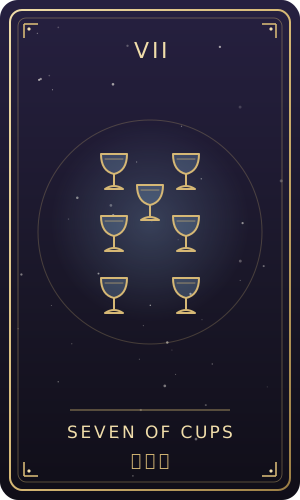
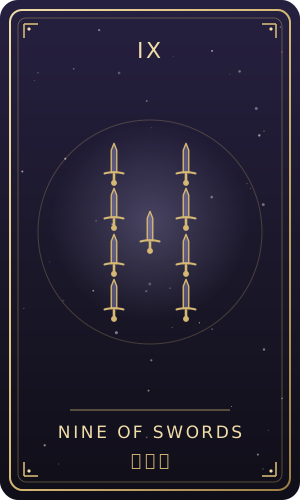
Draw three times and get The Sun, the Nine of Swords and the Seven of Cups. Which one do you believe? Most people quietly pick the one that matches their hopes, which is confirmation bias at work; when they can't pick, the anxiety grows. The Seven of Cups describes exactly that state: so many options and possibilities that it's hard to tell which are real and which are beautiful illusions.
You lose what tarot is good at
Tarot's real value is the unexpected card that makes you look from a new angle. Redraw until you reach a familiar, comfortable answer and you've thrown that angle away. When a card makes you uncomfortable, try asking "Why does this card bother me?" before replacing it. That question is often the most useful part of the whole reading.
When a Follow-up or Clarifying Card Makes Sense
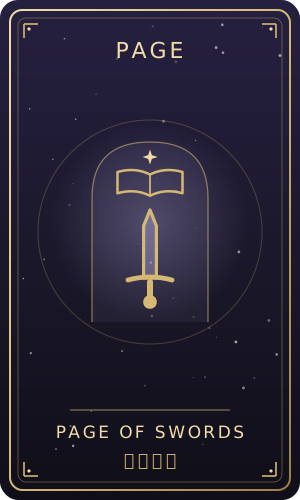
Asking a follow-up isn't cheating. It's closer to the curiosity of the Page of Swords: asking questions in order to understand more. Drawing again is reasonable when:
- A card is unclear and you want a clarifier. With a physical deck, you can draw one more card from the rest of the deck to answer "What is this card reminding me of?" Online, turn the follow-up into a new, narrower question.
- You want another side of the same matter. If the first reading pointed to communication as the obstacle, asking "How can I say what I mean more clearly?" digs deeper rather than overturning it.
- Something has genuinely changed. An interview invitation arrives, or the other person gets in touch. Asking now is asking about a new situation.
- The question itself was wrong. You realize it was too vague or was really about someone else's decision. Rewriting it and asking again fixes the question; it isn't shopping for an answer.
If you know in advance you'll want follow-ups, use ORAE's custom spread: choose 1 to 12 cards and name positions such as "situation", "obstacle", "what I can do" and "clarifier", so every angle is drawn in one go.
Example: a follow-up that works
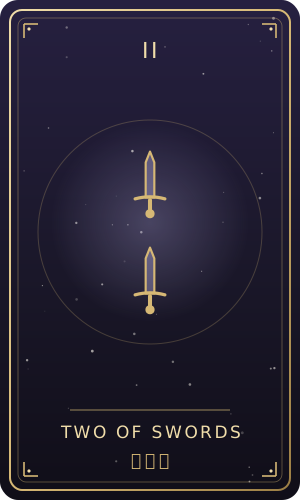
Here's an invented example. Sam asks, "Over the next month, how can I improve communication with my manager?" and draws the Two of Swords upright: caught between two options and, afraid of choosing wrongly, deciding not to look or move. It clicks. He's been avoiding a conversation he needs to have, but doesn't know where to start.
So he starts a new reading and asks, "How can I open that conversation?" He draws the Page of Swords: curiosity, asking questions, gathering information. Together the two readings suggest a concrete step: prepare a few questions and ask his manager what they expect, rather than opening with a defense.
The unhelpful version would be rewording the question as "Does my manager dislike me?" and drawing five times until a gentle-looking card appears. The first approach digs deeper; the second only looks for comfort.
Watch for the same question in disguise
Asking several different questions in a day is fine, but check whether they're really one question in different words. "Will he come back?", "Do we still have a chance?" and "Does he still have feelings for me?" look like three questions; they're all asking the same thing. If you catch yourself doing this, you're redrawing.
How Long Should You Wait Before Asking Again?
Tarot has no official cooling-off period, but a good principle is to give reality a chance to move:
| Type of question | Suggested gap |
|---|---|
| Today's mood, a daily prompt | The next day |
| Something weeks away, like an interview or exam | One to two weeks, or when news arrives |
| Bigger questions about love or career direction | Around a month, or after acting on the advice |
| A question with a set timeframe | When that period ends, or at a key milestone |
If you asked "What should I watch for at work over the next three months?", the natural time to ask again is when you look back three months later. For more on tarot and time, see Timing with Tarot.
Change the Question, Not the Card
Often the urge to redraw comes from an answer that unsettled you. Instead of swapping the card, swap the question:
- Before: "Will we get back together?" (you drew a card you didn't like and want another go)
- Rephrased: "While I wait, how can I look after myself?"
- Before: "Is this job right for me?"
- Rephrased: "If I take this job, what do I most need to check first?"
- Before: "Will I pass this exam?"
- Rephrased: "With two weeks to go, where should my study time go?"
Each rephrase moves the focus from "what will happen" to "what can I do". More techniques are in How to Ask Tarot Good Questions.
When Similar Themes Keep Coming Back
If you ask again weeks later and Swords keep appearing, or a "pause" card like The Hanged Man keeps turning up, that's different from rapid-fire redrawing. Treat it as a question worth sitting with: "Am I stuck in the same place?"
It also helps to know that repeats are far more common than intuition suggests: drawing one card a day, the chance that at least one card has repeated passes 50% by the 11th draw. So a repeat isn't an omen in itself; your attention to it is the message worth hearing. For a way to work with recurring cards, see Why Do I Keep Drawing the Same Tarot Card?, and for the full maths, Why Tarot Feels Spot On.
How ORAE Handles Redraws
ORAE is designed so you can ask again, but an earlier result is never quietly rewritten:
- One card of the day. On the daily fortune page, today's card stays the same for you all day, however often you refresh.
- One draw per reading. Results are securely saved before the cards are revealed, so refreshing, double-clicking or a network retry brings back the same result.
- "New reading" means a brand-new draw. Choosing "New reading", or "Draw again" on Draw One, shuffles all 78 cards with a fresh random seed, completely independent of the last reading. The question you type doesn't affect which cards appear.
- You can compare later. When you're signed in, every reading is saved to your history, where you can add notes and favorites and look at several readings on the same question side by side.
Three Questions to Ask Before You Draw Again
- Do I want to see something more clearly, or do I just dislike the answer?
- Has anything actually changed since last time?
- Can I ask from a different angle?
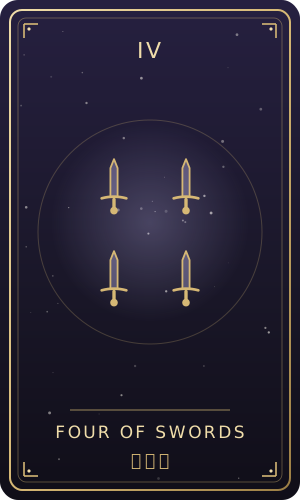
If the answers are "I dislike it", "nothing has changed" and "no", what you need right now probably isn't another card. Like the Four of Swords, take a rest first. Come back once your mind has settled and the situation has moved on; the answer will mean more.
FAQ
Can I keep asking tarot the same question?
You can ask again, but it's best not to draw until you like the answer. Each draw is a new, independent result, so repeated redraws usually just leave you with the answer you wanted. Ask again once something has changed or you've reframed the question.
Does redrawing make tarot less accurate?
Redrawing doesn't change the odds of any single draw, but it changes how you read the results. In a one-card yes/no reading, a single draw leans yes about 34.6% of the time; allow up to five draws and at least one yes appears about 88.0% of the time. That yes reflects persistence, not an answer.
What is a clarifying card, and is it okay to draw one?
A clarifier is an extra card drawn to shed light on a card you don't understand, and it's a common, reasonable practice. With a physical deck, draw it from the remaining cards; online, ask a narrower follow-up question, or plan a clarifier position in advance with a custom spread.
How long should I wait before asking the same question again?
There's no fixed rule. A daily prompt can be redrawn the next day; things a few weeks away, after one to two weeks or when news arrives; bigger questions about love or career, after about a month or once you've acted. If your question had a timeframe, wait until it has passed.
Can I redraw my card of the day on ORAE?
No. Your card of the day stays fixed for the whole day, even if you refresh, which makes it a steady prompt. If you have something else to ask, start a new reading; it's shuffled with a fresh random seed and is completely independent of earlier results.
Try a reading on ORAE
Free, no sign-up, no AI: fixed, transparent interpretation rules.