Yes or No Tarot Meanings for All 78 Cards
· 7 min read
Does your card lean yes, no or maybe? Here is the upright and reversed yes/no leaning of all 78 cards from ORAE’s own card data, plus how to phrase the question, how reversals shift the answer and when not to ask.
Will they text back? Is this a good week to ask for a raise? Sometimes you don't want a ten-card story; you want a direction. A yes or no tarot reading gives you exactly that: one card, read as leaning yes, no or maybe. This guide lists the yes/no leaning of all 78 cards, upright and reversed, taken straight from ORAE's own card data. It also covers how to phrase the question, why "maybe" is a real answer, how reversals shift things and when a yes/no reading is the wrong tool. If you'd rather just draw, our free yes or no tarot reading takes about a minute.
How Yes or No Tarot Works: Three Leanings
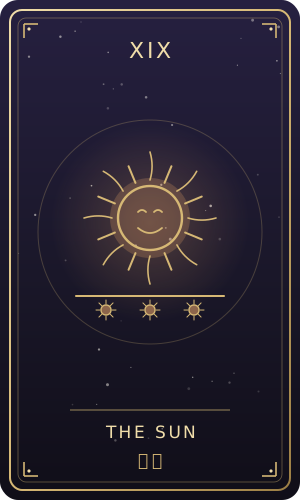
Every card on ORAE carries one yes/no leaning when upright and another when reversed. Card pages show them as "Leans yes", "Leans no" and "Depends", together with the reason; The Sun's yes or no page is a good example. In the tables below they're shortened to:
- Yes: the energy is favourable and conditions are relatively ripe.
- No: there's resistance, or the timing is off; adjust before you act.
- Maybe: the answer isn't settled; it depends on information, timing or what you do next.
These describe the overall mood of a card, not a verdict. The tarot cheat sheet shows the same data at a glance.
The Big Picture: How the 78 Cards Split
| Leaning | Upright | Reversed |
|---|---|---|
| Yes | 53 cards | 1 card |
| Maybe | 12 cards | 51 cards |
| No | 13 cards | 26 cards |
Upright, most cards lean yes, because most upright meanings describe energy flowing freely. Reversed, maybe is by far the most common leaning. That's because ORAE reads a reversal as energy that is blocked, delayed or in transition rather than simply flipped into its opposite. There's more on that in upright and reversed cards.
How to Ask a Yes or No Question That Helps
Vague questions get vague answers. A few principles:
- One thing per question. "Should I change jobs or move?" is two questions; draw for each separately.
- Make yourself the subject. "Is it a good idea for me to invite them out?" turns into action more easily than "Will they ask me out?"
- Add a time frame. "This month" or "this weekend" gives the answer edges.
- Ask about what you can influence. When the outcome rests entirely on someone else, the card can only describe the mood.
| Vague | Clearer |
|---|---|
| Will I be happy? | Is this month a good time for me to sign up for that course? |
| Will they like me? | Is it a good idea to invite them for coffee this week? |
| Should I quit, move or change cities? | Is it a good time for me to hand in my notice before the end of the year? |
For more on phrasing, see how to ask tarot good questions.
Reading One Card: From Leaning to Action
The leaning is only the starting point. Read it in three steps:
- Note the leaning. Yes, no or maybe.
- Read the reason. Two maybes can mean very different things.
- Turn it into one action. Ask yourself, "Knowing this, what can I do this week?"
Example: The question is "Is it a good idea to invite them for coffee this week?" and the card is the Knight of Wands reversed. It leans maybe: drive has lost direction, so the answer depends on slowing down and thinking before you act. That isn't "don't ask". It's a nudge to decide what you'd like to talk about and when suits them, then ask in an easy, low-pressure way instead of firing off five messages on impulse. Upright, the same card would lean yes and encourage you to act decisively.
Why "Maybe" Exists
A maybe can feel like a dodge, but it's often the most honest answer a card can give. Twelve cards lean maybe when upright, and they fall into roughly three groups:
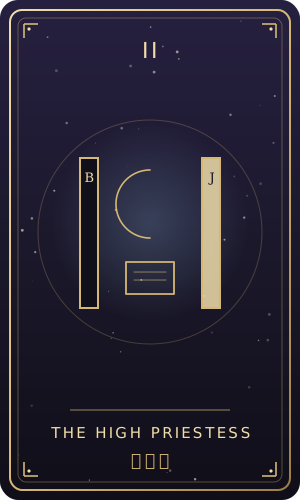
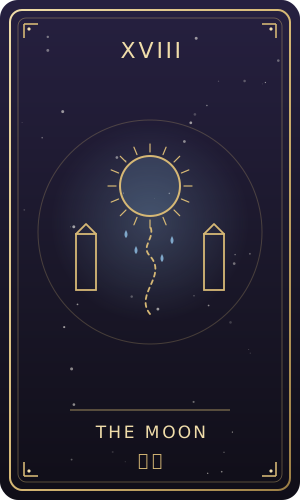
- Not enough information yet. The High Priestess and The Moon say something hasn't surfaced; don't decide in the dark.
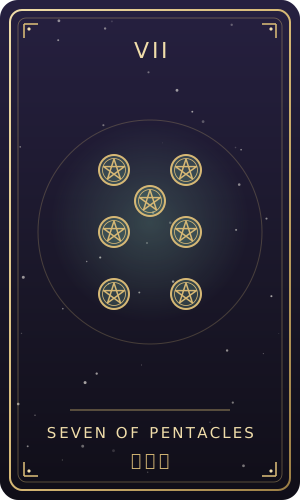
- It needs time. The Seven of Pentacles is the gardener watching a crop ripen. The result is still on its way, and it's worth checking how you're investing your effort.
- It depends on your choice. Death marks the end of an old form. If your question is whether you can embrace a new beginning, it tilts toward yes, provided you're willing to let go.
When you draw a maybe, try rephrasing: "What can I do now to make this clearer?" Then draw one more card as advice.
How Reversals Shift the Answer
Compare each card's upright and reversed leanings and a few patterns appear:
| Upright → Reversed | Cards | Examples |
|---|---|---|
| Yes → Maybe | 35 | The Sun, The Star, Ace of Wands |
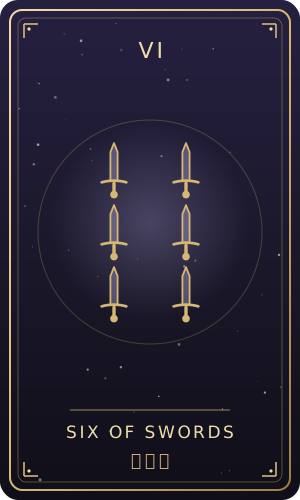
| Yes → No | 18 | The Lovers, Wheel of Fortune, Six of Swords |
| Maybe → No | 7 | The High Priestess, The Hanged Man, Seven of Pentacles |
| No → Maybe | 11 | The Devil, Five of Cups, Ten of Swords |
| Maybe → Maybe | 5 | The Moon, Two of Swords, Four of Swords |
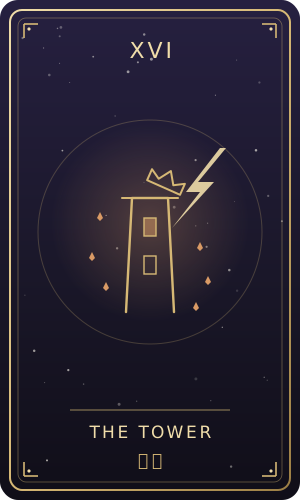
| No → No | 1 | The Tower |
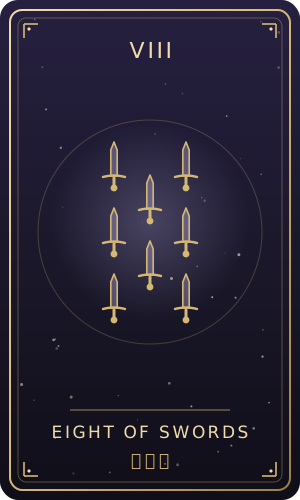
| No → Yes | 1 | Eight of Swords |
Put simply, a positive card reversed usually means "discounted or delayed": The Sun reversed is still optimistic, but the good result may come later or smaller. A heavy card reversed often means "the worst has passed": the Ten of Swords reversed says the lowest point is behind you, and the Five of Cups reversed is someone turning away from loss. The Eight of Swords is the only card that flips from no to yes, as the bound figure starts to loosen the ties. The Tower leans no both ways, a reminder to deal with the core problem first. If you choose "Upright only" in the reading options, just use the upright column below.
Yes or No Meanings for All 78 Cards
These tables come directly from ORAE's card data. Click a name for the full meaning; each card's "Yes or No" page also explains the reasoning behind its leaning.
Major Arcana
Of the 22 Major Arcana, 15 lean yes upright and 5 lean maybe; only The Devil and The Tower lean no.
| Card | Upright | Reversed |
|---|---|---|
| The Fool | Yes | No |
| The Magician | Yes | No |
| The High Priestess | Maybe | No |
| The Empress | Yes | Maybe |
| The Emperor | Yes | No |
| The Hierophant | Yes | Maybe |
| The Lovers | Yes | No |
| The Chariot | Yes | No |
| Strength | Yes | Maybe |
| The Hermit | Maybe | No |
| Wheel of Fortune | Yes | No |
| Justice | Yes | No |
| The Hanged Man | Maybe | No |
| Death | Maybe | No |
| Temperance | Yes | Maybe |
| The Devil | No | Maybe |
| The Tower | No | No |
| The Star | Yes | Maybe |
| The Moon | Maybe | Maybe |
| The Sun | Yes | Maybe |
| Judgement | Yes | Maybe |
| The World | Yes | Maybe |
Wands
Wands are action and drive: 12 lean yes upright, with only the Five of Wands at maybe and the Ten of Wands at no.
| Card | Upright | Reversed |
|---|---|---|
| Ace of Wands | Yes | Maybe |
| Two of Wands | Yes | Maybe |
| Three of Wands | Yes | Maybe |
| Four of Wands | Yes | Maybe |
| Five of Wands | Maybe | Maybe |
| Six of Wands | Yes | Maybe |
| Seven of Wands | Yes | Maybe |
| Eight of Wands | Yes | No |
| Nine of Wands | Yes | No |
| Ten of Wands | No | Maybe |
| Page of Wands | Yes | Maybe |
| Knight of Wands | Yes | Maybe |
| Queen of Wands | Yes | Maybe |
| King of Wands | Yes | Maybe |
Cups
Cups are about feelings: 10 lean yes upright, while the Four, Five and Eight lean no and the Seven sits at maybe.
| Card | Upright | Reversed |
|---|---|---|
| Ace of Cups | Yes | Maybe |
| Two of Cups | Yes | No |
| Three of Cups | Yes | Maybe |
| Four of Cups | No | Maybe |
| Five of Cups | No | Maybe |
| Six of Cups | Yes | Maybe |
| Seven of Cups | Maybe | Maybe |
| Eight of Cups | No | Maybe |
| Nine of Cups | Yes | Maybe |
| Ten of Cups | Yes | Maybe |
| Page of Cups | Yes | Maybe |
| Knight of Cups | Yes | No |
| Queen of Cups | Yes | Maybe |
| King of Cups | Yes | Maybe |
Swords
Swords have the most no answers of any suit, with six leaning no upright. The Ace and all four court cards lean yes upright but no when reversed.
| Card | Upright | Reversed |
|---|---|---|
| Ace of Swords | Yes | No |
| Two of Swords | Maybe | Maybe |
| Three of Swords | No | Maybe |
| Four of Swords | Maybe | Maybe |
| Five of Swords | No | Maybe |
| Six of Swords | Yes | No |
| Seven of Swords | No | Maybe |
| Eight of Swords | No | Yes |
| Nine of Swords | No | Maybe |
| Ten of Swords | No | Maybe |
| Page of Swords | Yes | No |
| Knight of Swords | Yes | No |
| Queen of Swords | Yes | No |
| King of Swords | Yes | No |
Pentacles
Pentacles deal with practical life: 10 lean yes upright, the Two, Four and Seven sit at maybe, and the Five leans no.
| Card | Upright | Reversed |
|---|---|---|
| Ace of Pentacles | Yes | Maybe |
| Two of Pentacles | Maybe | No |
| Three of Pentacles | Yes | Maybe |
| Four of Pentacles | Maybe | No |
| Five of Pentacles | No | Maybe |
| Six of Pentacles | Yes | Maybe |
| Seven of Pentacles | Maybe | No |
| Eight of Pentacles | Yes | Maybe |
| Nine of Pentacles | Yes | Maybe |
| Ten of Pentacles | Yes | Maybe |
| Page of Pentacles | Yes | Maybe |
| Knight of Pentacles | Yes | No |
| Queen of Pentacles | Yes | Maybe |
| King of Pentacles | Yes | Maybe |
When Not to Use a Yes or No Reading
- Health, legal and investment questions. Lean on qualified professionals; one card can't replace a doctor, a lawyer or a financial plan.
- Checking up on someone else. "Are they cheating?" tends to feed anxiety, and a card is never a reason to monitor a partner. Ask "How can I handle the unease I feel?" instead.
- Decisions with many moving parts. Use a two-choice reading or a multi-card spread.
- Redrawing the same question. Drawing again until you like the answer only measures your nerves. Wait until something has actually changed.
- You've already decided. If you're really looking for permission, ask yourself first: will I act on the answer whatever it is?
Try It on ORAE
The yes or no reading uses a single card by default, so one draw shows you the leaning and the reason behind it. It's free, needs no account and uses no AI: the meanings and rules are fixed. Before you draw, the whole deck is shuffled with secure randomness and a hash of the seed is shown. When your question is recognised as a yes/no question, or the spread has only one or two cards, the result page adds a yes/no leaning. ORAE totals the cards (yes +1, no −1, maybe 0): above zero leans yes, below zero leans no, and zero means maybe.
For more context, start a free online tarot reading with a full spread, or draw one card as a daily practice. A yes/no reading shows the leaning of the moment, not a guarantee; what you do next is still up to you.
FAQ
Are yes or no tarot readings accurate?
A yes or no reading shows the leaning of the moment. It's useful for sorting out your instincts, not for guaranteeing an outcome. When the question depends on someone else's decision, their choices can change the answer, and big decisions deserve real information and professional advice.
Does a reversed card always mean no?
No. In ORAE's card data, 51 of the 78 cards lean maybe when reversed and 26 lean no, while the Eight of Swords reversed leans yes. A reversal usually means blocked or delayed energy, so read the meaning too.
What should I do with a "maybe"?
A maybe usually means information is missing, the timing is not right yet, or the outcome depends on what you do. Rephrase the question as "What can I do now to make this clearer?" and draw one more card as advice.
How many cards should I draw for a yes or no question?
One is the most common and the most direct. With two or more, ORAE totals the leanings (yes +1, no −1, maybe 0) to find the overall direction, but it is still worth reading each card.
Can I ask the same yes or no question again?
Wait until something has changed, such as new information or the passing of some time. Asking again and again in a short span mostly reflects anxiety rather than a new answer.
Try a reading on ORAE
Free, no sign-up, no AI: fixed, transparent interpretation rules.