Celtic Cross Spread: A Worked Example Reading, Card by Card
· 4 min read
Know the cards but struggle to connect ten of them? Follow one complete, fictional Celtic Cross reading from first overview through every position to a story with clear next steps.
The Celtic Cross is the most famous ten-card spread in tarot, and it's where many learners hit a wall: they know what each card means but can't make the ten of them tell one story. This guide walks through a complete reading, position by position, and then shows how to pull it together. The person, question and cards below are a fictional example designed for teaching, not a real reading. Card meanings follow the ORAE card database.
The Example: Maya's Career Question
Example: Maya is 32 and has worked in marketing at a stable company for five years. For the past year she has been teaching herself UX design in the evenings, and the more she learns, the more she likes it. She still can't commit. Her question: "If I want to move into UX design, what do I need to keep in mind over the next six months?"
Notice the wording. She isn't asking "Will I succeed?" but "What do I need to keep in mind?" Open questions give all ten positions room to say something useful; see How to Ask Tarot Good Questions for more. Here is what she drew:
| Position | Card | Orientation |
|---|---|---|
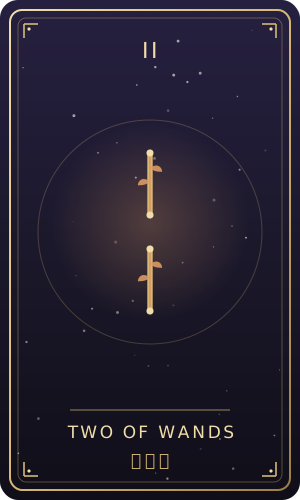
| 1 The Present | Two of Wands | Upright |
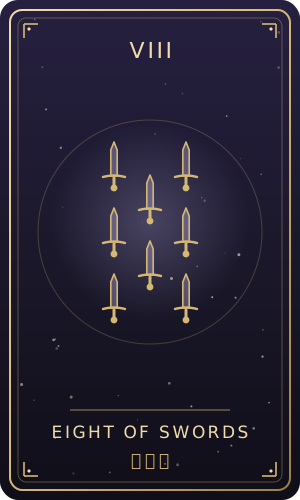
| 2 The Challenge | Eight of Swords | Upright |
| 3 Foundation | Four of Pentacles | Upright |
| 4 Recent Past | Ten of Wands | Upright |
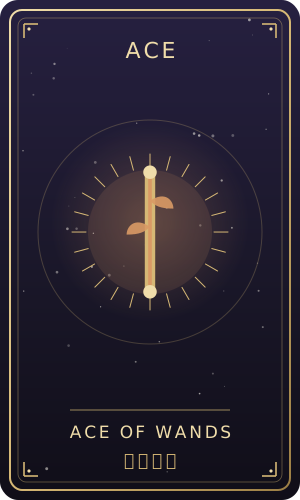
| 5 Conscious Aim | Ace of Wands | Upright |
| 6 Near Future | Page of Swords | Upright |
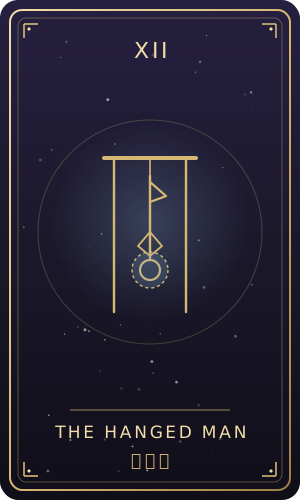
| 7 Your Attitude | The Hanged Man | Reversed |
| 8 Environment | Three of Pentacles | Upright |
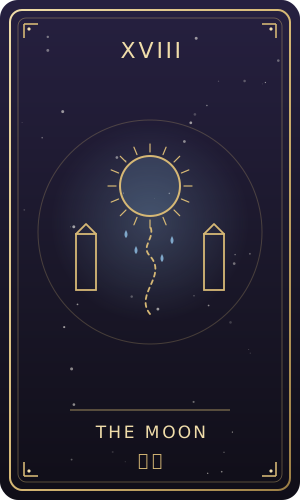
| 9 Hopes & Fears | The Moon | Upright |
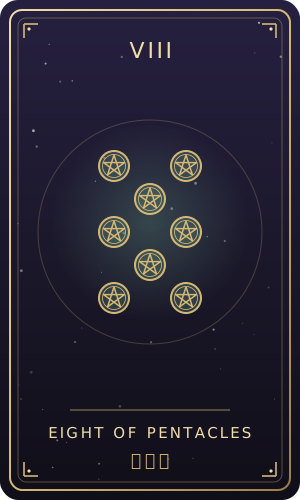
| 10 Outcome | Eight of Pentacles | Upright |
Step 1: Take In the Whole Spread
Before reading any single card, spend thirty seconds on the big picture:
- Suits. Three Wands, three Pentacles, two Swords and no Cups. Passion and action (Wands) are evenly matched with practicality and security (Pentacles), which is exactly the tug-of-war at the heart of a career change. The Swords show that her thinking plays a key role. No Cups doesn't mean no feelings; it suggests the sticking point here is less emotional than mental and practical.
- Major Arcana. Two majors land in Your Attitude and Hopes & Fears, both inner positions. The biggest lesson seems to be inside her rather than in her circumstances.
- Reversals. Just one, in Your Attitude. That's worth a closer look.
Step 2: Read the Cross (Cards 1–6)
1 The Present: Two of Wands
The Two of Wands shows a figure on castle battlements, globe in hand, gazing at the horizon. Maya has found her footing and is weighing where to go next. It's a near-perfect picture of planning and decision-making.
2 The Challenge: Eight of Swords
Crossing her is the Eight of Swords: a blindfolded woman surrounded by swords, yet with her feet free. What holds Maya back is mostly thought, such as "I'm too old for this" or "I don't have a design degree," rather than reality itself.
3 Foundation: Four of Pentacles
At the root is the Four of Pentacles, holding tightly to resources and stability. Five years of steady salary and security sit underneath her hesitation. That isn't a flaw; it's a real need that deserves attention.
4 Recent Past: Ten of Wands
The Ten of Wands is someone bent under a heavy load. Over the past year Maya took on far too much at work. That pressure is now passing, and it helps explain why she's so hungry for change.
5 Conscious Aim: Ace of Wands
What she consciously wants is the Ace of Wands: a fresh spark of passion and the urge to act on it. Her goal is clear. She wants work that genuinely excites her.
6 Near Future: Page of Swords
Approaching is the Page of Swords: curiosity, questions and information-gathering. The coming weeks favor research, such as studying job listings and asking people in the field what the work is really like.
Step 3: Read the Staff (Cards 7–10, Bottom to Top)
7 Your Attitude: The Hanged Man, reversed
Upright, The Hanged Man is a meaningful pause. Reversed, it's stagnation and waiting in vain. Maya has been "thinking about it" for a year, and the card's message is direct: a pause that brings no new perspective is a signal to choose again.
8 Environment: Three of Pentacles
The Three of Pentacles is about collaboration and skills being noticed. Her surroundings hold real resources: designers at her company, a learning community, perhaps a side project she could join.
9 Hopes & Fears: The Moon
The Moon is uncertainty, with imagination magnifying unease. Hopes and fears are often two sides of one thing: she longs for an unknown new life and is afraid of it. The card advises slowing down without mistaking guesses for facts.
10 Outcome: Eight of Pentacles
If the current energy continues, the likely outcome is the Eight of Pentacles: focused practice and steady skill-building. This isn't a promise that she'll land a design job. It points to a period of dedicated work in which her abilities grow in a reliable, lasting way.
Step 4: Weave the Cards Into a Story
Finally, compare a few positions against each other:
- The Present and the Outcome. From the planning of the Two of Wands to the hands-on work of the Eight of Pentacles: the storyline is turning ideas into practice.
- Conscious Aim and Outcome. The spark of the Ace of Wands lasts only if it becomes the daily discipline of the Eight of Pentacles.
- Challenge and Foundation. The self-limiting thoughts of the Eight of Swords grow from the security needs of the Four of Pentacles. Rather than suppressing that worry, she can give it concrete limits.
- Your Attitude and Near Future. The stalled waiting of the reversed Hanged Man can be broken by the active questioning of the Page of Swords.
Put together, the reading says something like this: "You're ready to plan your next move. What's really holding you back is worry about security and self-doubt. Gather information, find people to work with, and turn your enthusiasm into steady practice."
The next steps can be concrete. Work out the savings floor that would make a transition feel safe. Block out regular weekly time for a portfolio. Talk to two working designers. Write down thoughts like "I'm too old" and check each one against the facts. For a career-focused angle on her challenge card, see the Eight of Swords career meaning.
Common Pitfalls With the Celtic Cross
- Don't read the Outcome alone. It shows where things are heading if nothing changes. Change your attitude or actions and the story can change too.
- A "good" card can be a challenge. If a positive card lands in The Challenge, ask how that strength is being overused right now.
- Read hopes and fears together. The same card is often both what you want and what you dread.
- Keep a record. Look back after a few months and you'll learn a lot about your own reading habits.
Try It on ORAE
The Celtic Cross spread page shows the layout and all ten positions, and you can start a reading as soon as your question is ready. ORAE interprets each card in the same ten positions, at Basic, Deep or Expert depth, completely free and with no sign-up required. Members can save their readings and keep a tarot journal for looking back later. To build your foundations first, read How to Use Spreads and Reading Card Combinations. However detailed the spread, it's a tool for thinking things through. The choices, and the actions, are still yours.
FAQ
What are the 10 positions of the Celtic Cross?
In order: The Present, The Challenge, Foundation, Recent Past, Conscious Aim and Near Future form the cross. The staff on the right, read bottom to top, is Your Attitude, Environment, Hopes & Fears and Outcome.
Where do you start reading a Celtic Cross?
Start with an overview of suits, Major Arcana and reversals. Then read the six cards of the cross, read the staff from bottom to top, and finally compare the Outcome with The Present and Conscious Aim.
Is the Outcome card in a Celtic Cross fixed?
No. The Outcome shows the likely direction if the current energy continues. When your attitude, choices or circumstances change, the result can change too, so treat it as guidance rather than a verdict.
Is the Celtic Cross good for beginners?
It can be, but it's easier once you're comfortable with one-card and three-card readings. Follow the four steps in this example, take your time, and write each reading down so you can start seeing how cards relate.
How do I read a positive card in the Challenge position?
A positive card in The Challenge usually means the energy itself is fine but is getting in the way right now, for example too many options, overconfidence or enthusiasm spread too thin. Ask where that strength is being overused.
Try a reading on ORAE
Free, no sign-up, no AI: fixed, transparent interpretation rules.