Will I Get the Job? Interview Tarot Cards and Hiring Signs
· 5 min read
Refreshing your inbox after an interview? Learn which tarot cards often point toward good news, which ones ask for more preparation, and how to read before the interview, while waiting and after an offer.
You send the application, then hear nothing. Or the interview goes fine, and now every phone buzz makes your heart jump. Job hunting comes with a very particular kind of anxiety, and "Will I get the job?" is one of the most common career questions people bring to tarot. This guide won't tell you that a certain card means a guaranteed offer. Instead, it covers the cards that often show up in interview readings, how upright and reversed differ, and how to approach a reading before the interview, while you wait and after an offer lands.
Can Tarot Tell You If You'll Be Hired?
Honestly, hiring depends on plenty of things outside your control: the other candidates, the budget, the manager's preferences, even a role being frozen at the last minute. Tarot can't guarantee an outcome, and it can't replace real preparation.
Where it can help is in two areas:
- Seeing the current tendency and pace, such as whether news is likely to come quickly or require patience.
- Turning nerves into action, by pointing to the strengths you should highlight and the gaps worth shoring up.
So instead of only asking "Will I get it?", also ask "What should I emphasize in this interview?" The answer tends to be more useful, and more calming.
Before the Interview: A Three-Card Prep Reading
A day or two before your interview, the Strengths and Obstacles spread makes a great check-in:
- Strength: a skill or experience you can lean on and should talk about more.
- Obstacle: a weak spot you might be asked about, or whatever is making you nervous.
- Advice: how to use the strength to get past the obstacle.
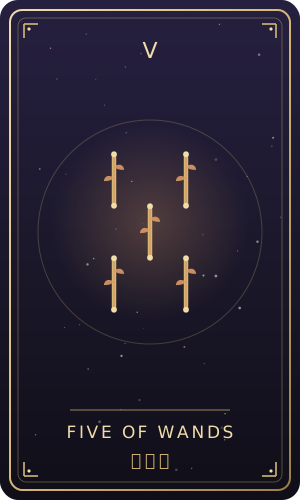
If your strength card is the Three of Pentacles, your expertise and teamwork are easy to see, so bring concrete examples or portfolio pieces. If your obstacle is the Five of Wands, expect strong competition, group exercises or several rounds. Rather than measuring yourself against everyone, focus on what makes you different.
Questions that work well:
- "What do I most need this interviewer to see in me?"
- "Where am I most likely to stumble?"
- "Would this company's environment suit me?"
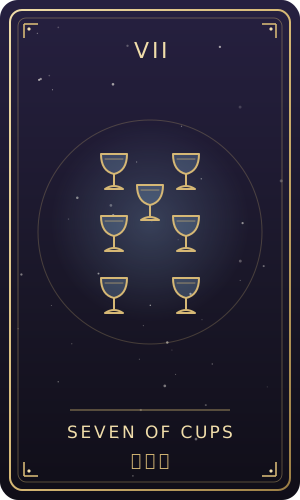
Here's a hypothetical example. You're applying for a design role and draw the Three of Pentacles as your strength, the Seven of Cups as your obstacle and the Queen of Swords as advice. One reading: your portfolio is your best asset, but you may be planning to show too much, too scattered. Pick the two or three projects that best match the job description and walk through your thinking clearly. Now you have a concrete prep list instead of a vague worry.
The Morning Of: One Reminder Card
If nerves are running high, draw a single card before you head out and treat it as a reminder for the day, not a prediction:
- Strength: composure is your advantage. Breathe before answering tough questions.
- The Magician: spell out what problems you can solve and connect your skills to the role.
- The Sun: let your enthusiasm show, but don't skip the details.
- The Hermit: prepare two or three thoughtful questions for the interviewer.
- Queen of Swords: speak clearly and remember you're also evaluating whether this company suits you.
A reversed card simply points to something to watch. Strength reversed, for instance, may reflect confidence worn down by recent rejections. Take a moment to recall a challenge you've handled well before you walk in.
Cards That Often Point Toward Good News
These cards tend to lean positive in job readings, but they're still guidance, not a promise.
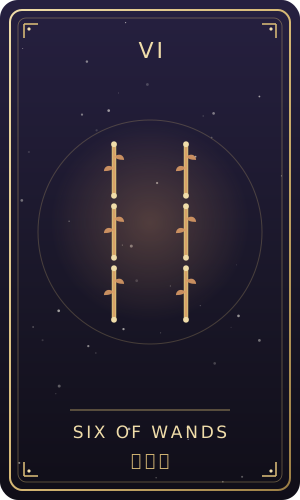
Six of Wands: Your Work Gets Noticed
A rider crowned with a laurel wreath is tarot's classic image of recognition. Upright, the Six of Wands suggests your abilities are easy to see and you could stand out. Reversed, it can point to a performance that felt off or news that's delayed, and it reminds you not to write yourself off after one setback.
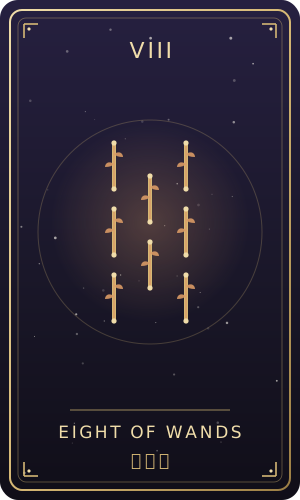
Eight of Wands: News Moves Fast
Eight staffs flying through the air signal rapid momentum. Upright, the Eight of Wands leans "yes" and often means you'll hear back soon. Reversed, it leans "no, at least not yet": the process may be stalled or a contact unresponsive, so use the waiting time to strengthen your materials.
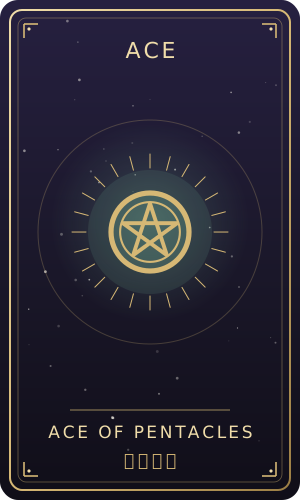
Ace of Pentacles: A Solid New Start
A hand from the clouds offers a single coin, a picture of a concrete, workable opportunity. Upright, the Ace of Pentacles often points to a real role with room to grow. Reversed, the opportunity exists but you should double-check pay, responsibilities and probation terms before rushing in. Alongside The Magician, see the Magician and Ace of Pentacles combination: your skills have found a stage.
Page of Pentacles and Three of Pentacles
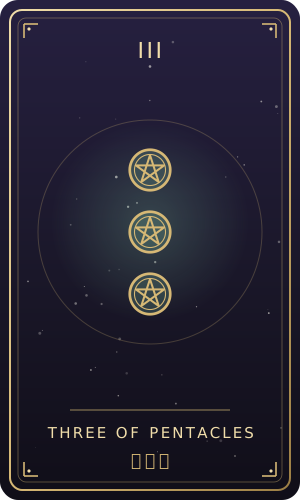
The Page of Pentacles often shows up with interview invitations, internships or entry-level openings; reversed, it nudges you to stop over-preparing and actually send the application. The Three of Pentacles is about recognized expertise and referrals from people you've worked with, which is especially helpful for portfolio-based or team-heavy roles.
Cards That Ask for More Preparation
Drawing these doesn't mean you won't get the job. They point to areas worth extra attention:
| Card | Possible message | How to prepare |
|---|---|---|
| Five of Wands | Tough competition, multiple rounds | Prepare two or three examples that set you apart |
| Seven of Cups | Too many options, or a listing that sounds too good | Verify what the role really involves |
| Two of Swords | Stuck between two opportunities | Compare terms in writing and set a decision deadline |
| Wheel of Fortune reversed | Timing isn't right yet, slow replies | Keep applying elsewhere; don't put all your hopes on one role |
After the Offer: Should You Accept?
An offer isn't the finish line; it's a new decision. If you have two offers, or you're torn between a new role and your current one, use the A/B Choice spread to compare the path and outcome of each. If you're still deciding whether to leave your job at all, read Should I quit my job? as well.
Whatever the cards say, check the written salary, hours, responsibilities and probation terms before you sign. Tarot can flag where to ask one more question; the paperwork is what your decision should rest on.
While You Wait, Don't Keep Redrawing
The most common post-interview habit is asking "Did I get it?" several times a day. Nothing changes except your anxiety level. Instead:
- Ask once and write it down, then compare once you hear back.
- Ask what you can do while waiting, such as applying elsewhere, polishing your portfolio or preparing for the next interview.
- Ask about timing separately if you need to. Our lesson on timing in tarot explains how, but treat it as a sense of pace, not an exact date.
Try It on ORAE
The Interview and Exam reading on ORAE opens with the Strengths and Obstacles spread, which is ideal for pre-interview prep. For a quick sense of direction, try the Yes or No reading, and to explore when news might arrive, there's the Timing reading. ORAE is completely free with no sign-up required. Every draw uses a cryptographically secure shuffle with a published seed hash, and interpretations follow fixed, transparent rules with no AI. Think of tarot as a way to sort your thoughts and maybe a small confidence boost before the big day. What gets you noticed in the end is the preparation you bring into the room.
FAQ
Is interview tarot accurate? Can it tell me if I got the job?
Tarot cannot guarantee a hiring decision, because so much is outside your control. It works best for seeing the current tendency and what you should prepare. Treat the cards as prompts, not verdicts.
Which tarot cards suggest good news after an interview?
The Six of Wands, Eight of Wands, Ace of Pentacles, Page of Pentacles and Three of Pentacles often lean positive in job readings, pointing to recognition, quick news or a solid opportunity. Read them alongside the other cards and your real preparation.
I drew a reversed card after my interview. Did I fail?
Not necessarily. Reversals often point to delays, gaps in preparation or something to adjust. The Eight of Wands reversed, for example, usually means the process is slow. Use the wait to keep applying and improve your materials.
How many times can I ask about the same interview?
Ask once and write the result down. Repeating the same question will not make the answer more accurate; it only feeds anxiety. If you want another angle, ask what you can do while you wait.
Can tarot help me choose between two job offers?
An A/B Choice spread can help you compare what each path might feel like and which conditions matter most to you. The written salary, hours, responsibilities and probation terms should still carry the most weight.
Try a reading on ORAE
Free, no sign-up, no AI: fixed, transparent interpretation rules.