Can You Read Tarot for Yourself? How to Do It Honestly
· 4 min read
Yes, you can read tarot for yourself, and many readers start that way. The hard part is interpretation, not the draw. Here are the common traps, six practical habits and a full worked example.
"Can you read tarot for yourself?" It's one of the most common beginner questions, often followed by something heard online: that readers shouldn't read for themselves. The truth is that self-reading is completely possible, and it's how a great many people learn. The real challenge isn't the cards. It's the person interpreting them. When a question touches your own life, it's hard not to look at the cards through hope or fear. This guide covers the traps that trip people up, six habits that help, and a full example reading.
Does Reading for Yourself Make Tarot Less Accurate?
Which card you draw has nothing to do with who's drawing it. With a fair shuffle, every card has the same chance. So whether a self-reading is "accurate" comes down to interpretation, not the draw.
Tarot isn't a tool for predicting the future anyway. It works more like a mirror, helping you describe your situation from a new angle. Seen that way, reading for yourself has a real advantage: nobody knows the context of your life better than you do. The drawback is that nobody is better at seeing only what they want to see, either. The old advice against self-reading is less a taboo than a warning: when you're emotionally invested, objectivity is hard.
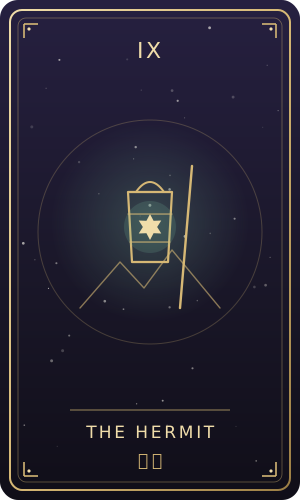
Think of The Hermit holding up his lantern. A good self-reading lights up the next step, not the entire road. For more on the psychology, see Is Tarot Accurate?
Four Common Self-Reading Traps
1. Reading only the half you like
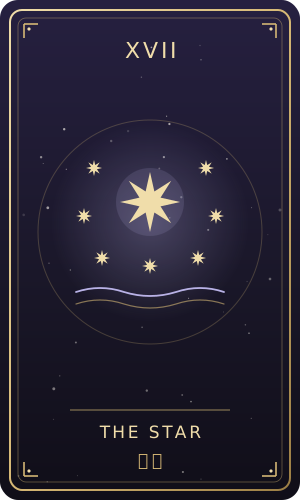
Every card has several layers, and it's easy to read only the ones that match your hopes. Draw The Star and you might decide "this will definitely work out," skipping past what it actually offers: hope, healing and renewal.
2. Projecting your fears
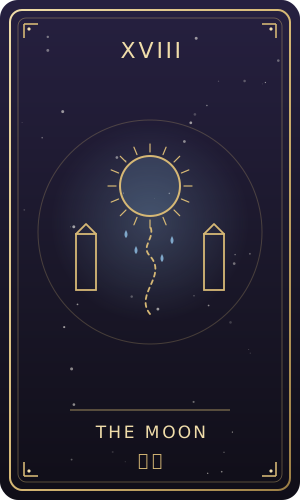
When you're anxious, everything looks like a bad omen. The Moon says "the situation isn't clear yet, so don't mistake guesses for facts," yet an anxious reader might hear "they're lying to me."
3. Redrawing until it feels right
Don't like the result? Draw again, and again. What you end up with isn't an answer; it's reassurance you picked out yourself.
4. Asking questions that are too big or vague
"Will my life turn out okay?" Any card can be made to fit, so none of them tells you much.
A Three-Minute Check-In Before You Draw
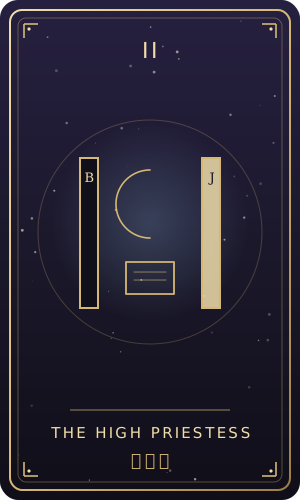
Before reading for yourself, take a moment to settle, the way The High Priestess sits in stillness:
- Turn your phone face down. Give yourself three uninterrupted minutes.
- Rate your anxiety from 1 to 10. If it's 8 or higher, take a walk or drink some water and come back later.
- Name the answer you're hoping for. Write it down. Admitting your hopes makes them less likely to steer your interpretation.
Six Habits for Honest Self-Readings
- Write the question before you draw. Once it's on paper, you can't quietly change it. See How to Ask Tarot Good Questions.
- Decide the spread and positions first. Know what each position means before the cards come out, so you can't shuffle meanings around afterward.
- Read in the third person. Pretend you're reading for a friend: "She drew the Seven of Cups, which suggests she..." A little distance does a lot.
- Separate observation, meaning and feeling. Write "what I see," "what the meaning says" and "what I feel" on three separate lines.
- One question, one draw. Give it a week or two, or wait until something has actually changed, before asking again.
- End with an action. Ask, "After this reading, what will I do next?" If you can answer, the reading was worth it.
Good and Not-So-Good Questions for Yourself
| Better questions | Questions to avoid |
|---|---|
| What am I overlooking here? | Will my illness get better? (See a doctor.) |
| What attitude will help me in this interview? | Will I win this lawsuit? (See a lawyer.) |
| What do I really want? | What is my ex doing right now, and with whom? |
| What can I adjust in this relationship? | Will this stock go up? |
The questions on the right either need professional help, intrude on someone else's privacy, or ask for certainty tarot can't give.
A Worked Example
- Original question: Should I quit my job?
- Reframed: If I'm considering a job change, what do I most need to get clear on right now?
- Spread: Situation, Action, Outcome (three cards).
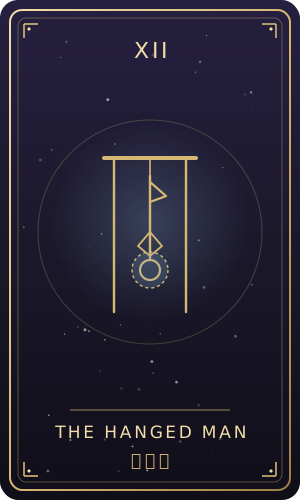
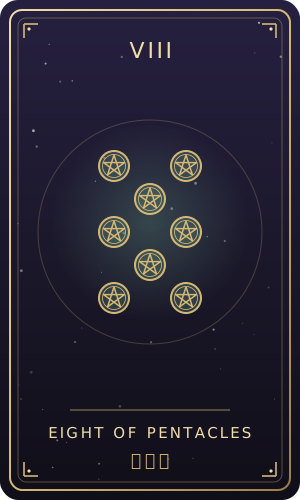
- Cards: Situation, The Hanged Man upright. Action, Eight of Pentacles upright. Outcome, The Star upright.
The trap: seeing The Star in the outcome position and thinking, "Great, a new job will definitely go smoothly."
A more balanced reading: The Hanged Man says I've been stuck in wait-and-see mode: waiting for a raise, for the right moment, for clarity, without ever looking at the problem from a new angle. The Eight of Pentacles gives concrete advice: do the focused, practical homework. Update the résumé, research two or three companies, talk to someone in the industry. The Star in the outcome position suggests that if I do this, I'll regain a sense of hope and direction. It's not a guarantee that I'll land the perfect job.
Action: Update my résumé this weekend and list three roles I genuinely want to apply for.
Two-week review: Don't just ask whether The Star "came true." Ask how much of the Eight of Pentacles homework you actually did. A self-reading is worth it when it helps you take the next step, not when the outcome card turns out to be right.
When to Skip Reading for Yourself
- When you're very upset, highly anxious or have just been through a shock.
- When you already know the answer and are looking for a reason to delay.
- When the question involves health, legal or financial matters that need professional judgment.
In those moments, rest, a conversation with someone you trust, or professional support will do more than a card.
Practicing Self-Readings on ORAE
ORAE's design happens to counter some self-reading bias. Every draw uses a cryptographically secure shuffle with a published seed hash, so neither your question nor your account affects which cards appear. Interpretations come from fixed, transparent rules rather than AI: the same card in the same position always gets the same meaning, never rewritten to please you, which gives you a steady outside reference. Readings come in three depths (Basic, Deep and Expert), so you can start simple and go further when you're ready.
For a quick question, try the Single Card spread or Draw One. To get to know yourself more deeply, try the nine-card Deep Self-Exploration spread. Everything is free with no sign-up required. If you create an account, you can save your reading history and keep a journal of your moods and what happened next; our guide to keeping a tarot journal shows how.
Tarot is a tool for reflection and entertainment. It can't guarantee outcomes or replace professional advice. When you read for yourself, the biggest gift usually isn't an answer. It's a more honest look at yourself.
FAQ
Is it bad luck to read tarot for yourself?
No. There is no evidence that self-reading brings bad luck. The common advice against it is really about objectivity: it is harder to read clearly when you are emotionally invested.
Are self-readings less accurate?
The draw itself is unaffected by who is drawing; with a fair shuffle every card has the same chance. The challenge is interpretation, which you can improve by writing your question first and reading in the third person.
How many times can I ask myself the same question?
Once in a short period is best. Redrawing tends to become a search for the answer you want. Wait a week or two, or until something has changed, before asking again.
What is the best spread for reading for yourself?
Start with one card or a simple three-card spread such as Situation, Action, Outcome, which keeps the focus on what you can do. For deeper reflection, try the nine-card Deep Self-Exploration spread.
Try a reading on ORAE
Free, no sign-up, no AI: fixed, transparent interpretation rules.