How to Keep a Tarot Journal (With a Template That Works)
· 5 min read
A tarot journal is the most underrated tool for learning tarot. Get an eight-field template, a fully worked example entry, weekly and monthly review methods, and a way to build your own card dictionary.
Most people learning tarot spend hours memorizing meanings and almost no time recording their own readings. That's a shame, because a tarot journal may be the most underrated learning tool there is. It shows you what the cards look like in your real life, and it reveals your habits and blind spots as a reader. This guide gives you a template you can copy, a fully worked example entry, and simple ways to review what you've written so your journal becomes genuinely useful rather than just another notebook.
What "Better Readings" Really Means
A journal won't turn tarot into a crystal ball. When people say journaling makes their readings more accurate, what they really mean is that their interpretations become more grounded in their own life. They connect a card to a situation faster, and they can name a concrete next step more easily.
A journal is also an honesty tool. We naturally remember the readings that "hit" and forget the ones that didn't. Writing everything down gives you the full picture. For more on that psychology, see Is Tarot Accurate?
Why Keep a Tarot Journal?
- Cards start speaking your language. The book says The Hermit means introspection. Your journal might reveal that, for you, The Hermit usually means "a day I need to eat lunch alone."
- Patterns become visible. Which questions do you keep asking? Which cards keep showing up? Notes are more honest than memory.
- Less anxious redrawing. Once a question and its reading are written down, you're less tempted to ask again and again.
- You can see your growth. Three months in, you'll notice clearer questions and richer interpretations.
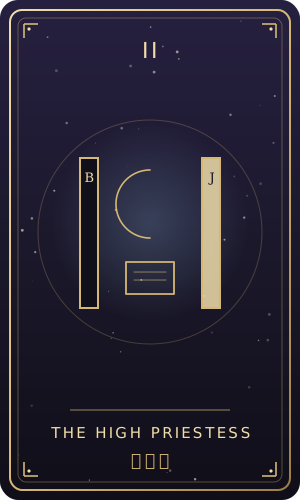
The half-hidden scroll in The High Priestess's lap is a good image for a tarot journal: some answers don't unroll all at once. They surface page by page.
The Eight-Field Tarot Journal Template
The most important principle: split each entry into what you write at the time and what you add later.
Write at the time of the reading:
- Date and time. Optionally note where you were and what had just happened.
- Question. One sentence, as specific as possible.
- Spread and cards. Which card landed in each position, upright or reversed.
- First impression. Before looking anything up, how does the image feel?
- Your interpretation. Combine meaning and position in your own words.
- Mood. How you felt before and after: anxious, hopeful, calm.
- Planned action. One small, concrete step.
Add one to two weeks later:
- What happened and review. Which line of the reading helped? Where were you overthinking?
A Worked Example Entry
- Date: Wednesday night, just after browsing a course sign-up page.
- Question: What would signing up for next month's Japanese class really mean for me?
- Spread: Two cards (Situation, Advice).
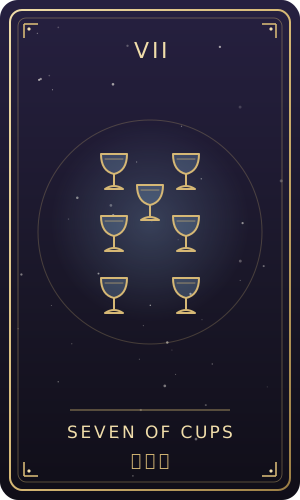
- Cards: Situation, Seven of Cups upright. Advice, Page of Pentacles upright.
- First impression: So many cups floating in the clouds it's dizzying. The Page is calmly focused on one coin.
- Interpretation: I want to learn Japanese, design and investing all at once. Each one is appealing, and each one is still a daydream. The Page says: choose one and start for real.
- Mood: Hopeful, a bit anxious.
- Action: Take one free trial lesson this week before deciding.
- Two-week review: I loved the trial, confirmed how many hours I can spare each week, and signed up. "Choose one" was the most useful line.
Notice the question asks what the class would mean, not "Will I succeed?" How you ask shapes how useful the entry becomes. See How to Ask Tarot Good Questions.
Stuck? Eight Tarot Journal Prompts
The "your interpretation" field is where most people stall. When that happens, answer one or two of these:
- What detail in the image did I notice first, and why?
- If this card were a person, what would they say to me?
- What recent event does this card remind me of?
- Before drawing, which card was I secretly hoping for? Why?
- Which line of this reading makes me most uncomfortable?
- How would the meaning change if this card were reversed?
- What advice would me-a-week-from-now give me today?
- When can I actually do the small step this card suggests?
The "most uncomfortable line" prompt is especially worth it. The sentence you want to skip is often the one you most need to hear.
How to Review: Weekly, Monthly, Quarterly
| When | What to look at | Ask yourself |
|---|---|---|
| Weekly | This week's cards and mood tags | Which reading helped most, and why? |
| Monthly | Share of Major Arcana, suit balance, recurring cards | Was this month about feelings, work, thoughts or action? |
| Quarterly | Repeated questions, actions taken | Has the way I ask changed? Am I stuck on the same issue? |
If one card keeps appearing, try the method in why you keep drawing the same card.
Build Your Personal Card Dictionary
Alongside individual entries, give each card its own page of personal meanings:
- During reviews, copy any card that resonated onto its own page.
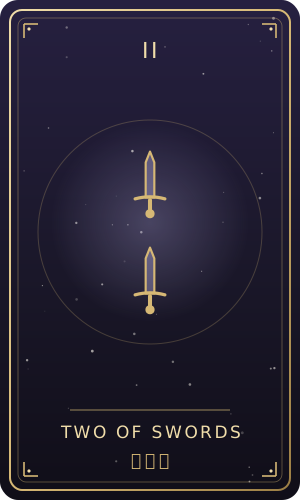
- Write what it looked like in your life, for example: "Two of Swords: I was avoiding a text I didn't want to answer."
- Note the orientation and the topic of the question.
After a few months, this dictionary will know you better than any book. Start with the 78-card cheat sheet as a base, and look up unfamiliar terms in the tarot glossary.
Five Common Journaling Mistakes
- Rewriting interpretations after the fact. Editing once you know the outcome erases the journal's honesty. Put later thoughts in the review field.
- Only recording the hits. The misses usually reveal your blind spots best.
- Writing too much and burning out. Five minutes an entry is enough. Consistency matters more than polish.
- Scoring readings as right or wrong. A better question: did this reading help me think more clearly?
- Forgetting your mood. The same card reads very differently when you're anxious versus calm.
Paper, Phone or Online? Journaling on ORAE
Paper has warmth, and a notes app is always at hand. Both work. If you'd like everything in one place, create a free ORAE account: your readings are saved to your history automatically, you can favorite readings and cards, and you can keep a tarot journal with mood tags. ORAE is completely free with no paid tiers, and interpretations come from fixed, transparent rules rather than AI, so the same card in the same position always gets the same meaning. That consistency makes it easy to compare with your own notes.
Not ready to sign up? You don't need an account to draw a card or check your daily reading. A notebook is all you need to begin, and the 30-day daily one-card practice is a great first project.
Tarot is a tool for reflection and entertainment. A journal doesn't record your fate. It records how you saw your situation in each moment, and the choices you made about moving forward.
FAQ
What should I write in a tarot journal?
At minimum: the date, your question, the cards and their orientation, your interpretation, your mood and one planned action. One to two weeks later, add what actually happened and what you learned.
Should I keep a tarot journal on paper or digitally?
Whichever you will actually keep up. Paper suits slow reflection and personal card pages; digital is easy to search. ORAE members can also use the built-in journal alongside their reading history and mood tags.
Does journaling make tarot readings more accurate?
It will not make tarot predictive, but it makes your interpretations more grounded in your own life and protects you from only remembering the hits.
How often should I review my tarot journal?
Skim weekly, look at suit balance and recurring cards monthly, and every few months check whether your questions and actions have changed.
Try a reading on ORAE
Free, no sign-up, no AI: fixed, transparent interpretation rules.