Daily One-Card Tarot: A 30-Day Practice Plan
· 4 min read
Drawing one card a day is the gentlest, most effective way to learn tarot. Here is a five-minute routine, eight morning questions, a 30-day plan and fixes for the most common beginner snags.
A daily one-card draw is the simplest tarot habit there is, and one of the most effective ways to learn. You pull a single card, spend five minutes with it, and check back in the evening. You don't need to memorize all 78 meanings first or master complicated spreads. Keep it up for a month and something shifts: the cards stop being a list of keywords and start feeling like familiar characters. Here's a complete routine, a set of good morning questions, a 30-day plan and the snags beginners hit most often.
Why Start With One Card a Day?
- It's a manageable dose. One card won't overwhelm you, even on a busy weekday.
- You get to compare. Draw in the morning, reflect at night, and you'll see what a card looks like in real life.
- You build your own meanings. Book keywords are a starting point; your experiences make the cards come alive.
- It creates a steady rhythm. A calm daily habit is healthier than only reaching for the cards when you're anxious.
The Five-Minute Daily Routine
- Pick a regular time. After breakfast, on your commute, before you open your laptop. Consistency beats perfection.
- Ask an open question. Something like "What do I need to pay attention to today?" More ideas below.
- Draw, then look before you read. Spend 30 seconds on the image. What is the figure doing? How do the colors feel?
- Read the meaning. Scan the keywords and core meaning, then pick the one word most useful for today.
- Write one sentence. "Today's card is ___, and I want to remind myself to ___."
Before bed, take two minutes to ask: was there a moment today when this card came to mind?
Eight Good Questions for a Morning Draw
- What do I need to pay attention to today?
- What opportunity is worth taking today?
- What attitude will help me with today's work or studies?
- How can I take care of myself today?
- What should I keep in mind with the people around me?
- What can I let go of today?
- What reminder do I most need to hear?
- What small habit can I practice today?
Skip anxious questions like "Will something bad happen today?" A daily card is about companionship and reflection, not forecasting disasters. For more on phrasing, see How to Ask Tarot Good Questions.
Your 30-Day Tarot Practice Plan
| Days | Focus | Daily task |
|---|---|---|
| 1–7 | Reading the image | Before reading the meaning, note three details and your first impression |
| 8–14 | Upright and reversed | When you draw a reversal, compare both meanings and decide which fits today |
| 15–21 | Suits and elements | Log whether it's a Major or which suit, and look at the spread of suits on the weekend |
| 22–28 | Connecting to life | Each night, write one specific moment when the card "showed up" |
| 29–30 | Review | Reread the month, pick the three cards that spoke loudest and write your own meaning for each |
A few tips along the way:
- Week one, don't memorize. Telling yourself the story in the picture sticks better than flashcard cramming.
- Week two, read Upright and Reversed. A reversal isn't automatically bad; it often means energy that's blocked, excessive or turned inward.
- Week three, pair it with the four suits. You may notice one suit dominating a particular stretch.
- Missed a day? No problem. Just pick up tomorrow. There's no need to "catch up" with extra draws.
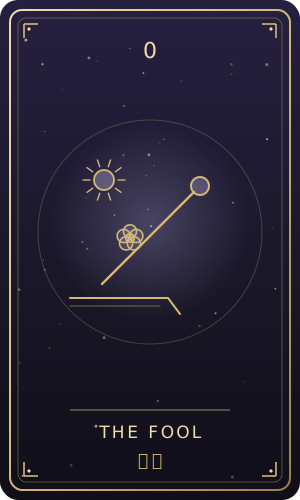
Here's what week one looks like in practice. You draw The Fool and, before reading anything, you note what you see: "standing at a cliff edge, holding a white rose, a small dog jumping at his feet." Then your first impression: "free, but a little risky." Those two lines already capture both sides of The Fool: a fresh start, and a leap that may need more preparation.
On Sundays, take ten minutes for a mini review. How many Major Arcana did you draw this week? Which suit came up most? Which day's card matched your mood best? Simple tallies like these slowly reveal the rhythm of your life.
What a Day With One Card Looks Like
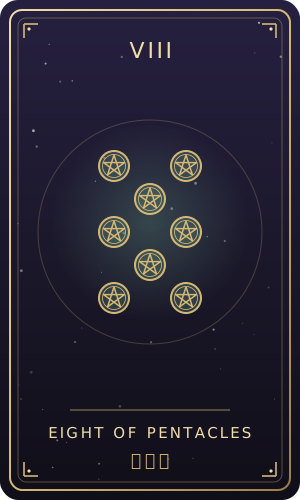
Say you draw the Eight of Pentacles upright. The image shows a craftsman carefully carving pentacles; the keywords are diligence, skill-building and focus. You write: "Today's card is the Eight of Pentacles, and I want to remind myself to do one thing at a time."
That evening you realize the most satisfying part of your day was the afternoon you silenced notifications and finished a report in one go. That's what the Eight of Pentacles looks like in your life.
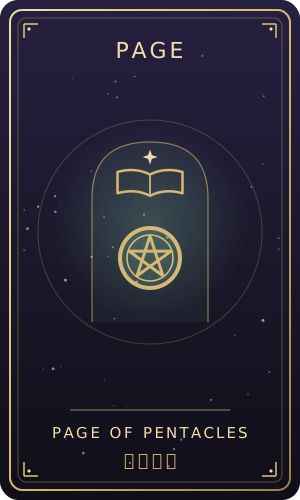
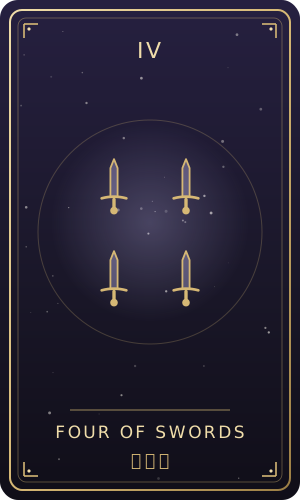
Draw the Four of Swords instead, and the reminder might be not to overbook yourself and to actually rest at lunch. Draw the Page of Pentacles, and it might be a good day to start learning something new, even if it's a ten-minute tutorial.
The Evening Review: A Four-Line Template
Your evening note doesn't need to be long. Four lines will do:
- Today's card: Four of Swords, upright.
- Morning reminder: Don't overbook; pause when tired.
- What happened: I wanted to zone out halfway through a meeting, wrapped it up ten minutes early, and had more energy that evening.
- One line to carry into tomorrow: Rest isn't laziness; it's how I go the distance.
Over time you'll see the same card take different shapes on different days. Those notes become your most valuable personal card meanings.
Four Common Beginner Snags
- You don't understand the card. Hold on to one keyword and leave the rest for your evening review.
- You want to redraw. One card a day is the whole point. Accepting it is what makes the evening comparison meaningful.
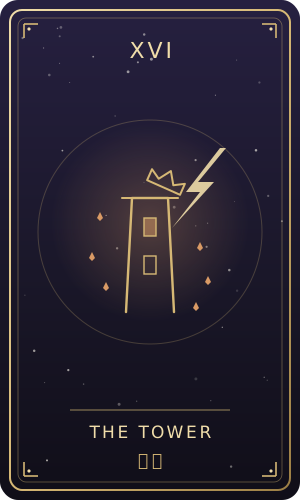
- A challenging card makes you nervous. It's a reminder, not a prediction. The Tower might simply mean "leave some flexibility in today's plans."
- The same card shows up several days running. That's more common than it feels. See why you keep drawing the same card.
After 30 Days: Where to Go Next
Once you've finished a month, keep going at your own pace:
- Move from one card to three. Try Past, Present, Future and practice linking cards into a story.
- Add a weekly rhythm. Check your weekly reading on Monday, then compare it with your daily cards over the weekend.
- Target the cards you don't know. Pick out the ones you never drew, or drew but couldn't read, and study a few each week.
- Run another 30 days. The second round usually goes faster, and it's easier to see how you've changed.
Start Your Daily Card on ORAE
The easiest way to begin is your daily reading. Your card stays the same all day no matter how many times you refresh, which suits this practice perfectly and removes the temptation to redraw. For a specific question, use Draw One. Want a little more? Try the three-card Daily Direction spread: theme of the day, opportunity and reminder.
To study the meanings, pair your practice with the tarot flashcards and the 78-card cheat sheet. ORAE is completely free and you can read without an account. If you sign up, you can keep your reading history and a tarot journal with mood tags, which makes the end-of-month review much easier. Our guide to keeping a tarot journal has templates.
One last note: a daily card is a small ritual of checking in with yourself and a way to learn tarot. It isn't a guarantee about the future. How your day goes is still up to the choices you make.
FAQ
When is the best time to draw a daily tarot card?
There is no rule. A morning draw works as a reminder for the day, while an evening draw suits reflection. What matters most is choosing a regular time so it becomes a habit.
Can I redraw my daily card if I do not like it?
It is better not to. One card per day lets you compare it with what actually happened; redrawing tends to turn into picking the answer you want. ORAE keeps your daily card the same all day, which helps.
What if my daily card is reversed?
A reversal is not automatically bad. It often points to blocked, excessive or inward-turned energy. Compare the upright and reversed meanings and decide which fits your day.
Do I need to memorize all 78 cards before starting?
No. A daily draw is how you learn as you go: look at the image, read the meaning, and check it against your day. After a month, the cards you meet most often will feel familiar.
Try a reading on ORAE
Free, no sign-up, no AI: fixed, transparent interpretation rules.