Tarot and Psychology: Jung, Archetypes and Why the Cards Feel Personal
· 4 min read
Why does a single tarot card so often seem to be about you? Explore Carl Jung's collective unconscious, archetypes and the shadow, how tarot writers use them, and why tarot is not a psychological test or therapy.
You draw The Hermit on a day when you badly want to be alone. You turn over The Devil and think of the habit you can't seem to break. Moments like these make tarot feel uncannily personal. Where does that feeling come from? One popular answer borrows from the Swiss psychiatrist Carl Jung and his idea of archetypes. This post explains Jung's key concepts, how tarot writers have applied them, and where the honest limits are: tarot isn't a psychological test, and it isn't therapy.
Who Was Jung? Three Ideas Worth Knowing
Carl Gustav Jung (1875–1961) was a Swiss psychiatrist and the founder of analytical psychology. His work is vast, but three ideas come up again and again in conversations about tarot.
The collective unconscious
Jung proposed that beneath each person's individual memories and experiences (the personal unconscious) lies a deeper layer of the psyche shared by all humans, which he called the collective unconscious. He used it to explain why myths, fairy tales and dreams from very different cultures keep producing similar characters and plots.
Archetypes
The recurring patterns in the collective unconscious are what Jung called archetypes. An archetype isn't a fixed picture; it's more like a predisposition that each culture dresses in its own imagery. Commonly discussed archetypes include the Hero, the Great Mother, the Wise Old Man, the Trickster and the Child, along with structural ones such as the persona, the shadow, the anima and animus, and the Self, which stands for the whole psyche.
Individuation
Jung called the lifelong process of getting to know and integrate the conscious and unconscious parts of yourself individuation. It isn't a box you tick once; it's a path you keep walking.
Did Jung Actually Study Tarot?
Not really, and this is a common misconception. Jung mentioned tarot only briefly in one of his seminars, remarking that the images seemed connected to archetypes. He never developed a tarot system and never used tarot as a clinical tool. Most of what is now called Jungian tarot comes from later tarot authors who borrowed his concepts. Their interpretations can be illuminating, but they're a way of reading the cards, not findings from Jung's research.
Archetypal Images in the Major Arcana
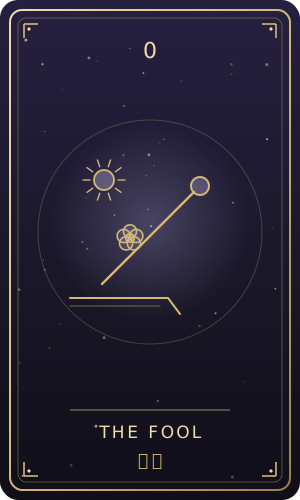
The 22 cards of the Major Arcana are often described as a journey that begins with The Fool, an idea that sits naturally alongside individuation. The table below shows pairings that tarot writers commonly use. Treat it as a lens, not an answer key.
| Card | Archetype often linked | A question to ask yourself |
|---|---|---|
| The Fool | The Child, the start of the journey | Where could I begin again with fresh eyes? |
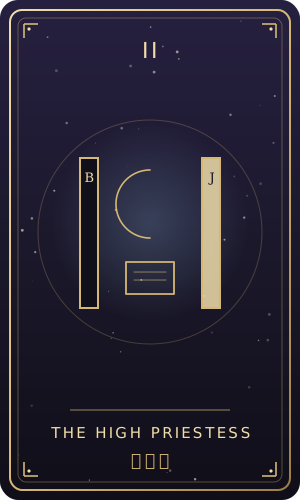
| The High Priestess | Intuition, the wisdom of the unconscious | What do I sense but haven't said out loud? |
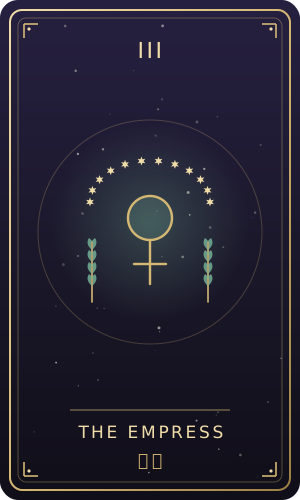
| The Empress | The Great Mother, nurture | How do I care for others, and for myself? |
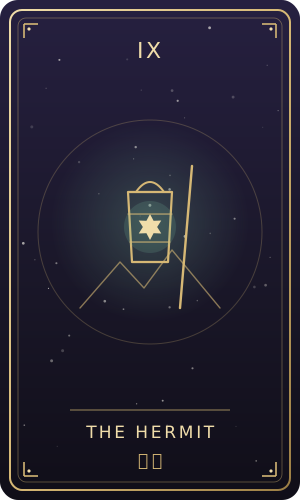
| The Hermit | The Wise Old Man | What would I find if I looked inward? |
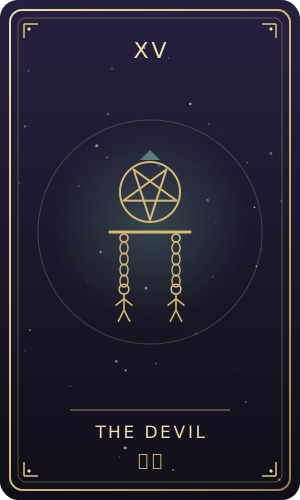
| The Devil | The shadow | Which desire or fear am I reluctant to admit? |
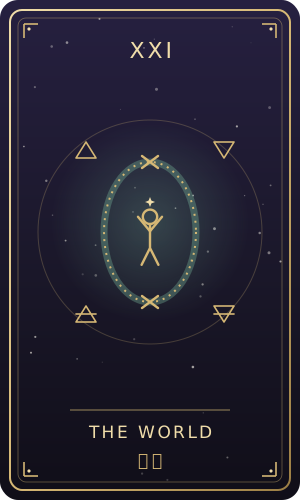
| The World | The Self, wholeness | Which parts of me are coming together? |
Look closely and the imagery does a lot of work. Behind The High Priestess a veil hides a body of water, suggesting truths beneath the surface of awareness. Around The Empress, ripening wheat and a flowing stream speak of nurture and growth. In The World, a dancer moves inside a laurel wreath, the picture of a journey fully traveled. These images resonate because they touch experiences so many people share.
Why the Cards Seem to Read Your Mind
From a psychological point of view, several things are going on:
- Projection. The images are open-ended, so you naturally pour your current concerns into them. What you "see" in a card is often something you already sensed but hadn't put into words.
- Universality. Archetypes describe experiences almost everyone has, such as fear of loss or the longing to be understood, so they land easily.
- The Barnum effect and confirmation bias. We tend to accept general descriptions as personal and to remember the hits more than the misses. Our lesson Is Tarot Accurate? goes deeper.
Many tarot fans also point to Jung's idea of synchronicity, or meaningful coincidence, to explain why the "right" card turns up. Synchronicity was Jung's hypothesis, and it hasn't been supported by scientific evidence. A more grounded view: the card arrives by chance, and the meaning is something you create when you connect it to your life. That act of connecting is exactly where tarot's reflective value lies.
Tarot Is Not a Psychological Test or Therapy
Online "tarot personality tests" can be fun, but it helps to keep the categories straight:
- Psychological tests. Formal tests are standardized and checked for reliability and validity against comparison groups, and they're administered and interpreted by trained professionals. Tarot has none of that foundation, so it can't determine your personality type, assess your mental health or diagnose anything.
- Psychotherapy. Therapy is provided by licensed professionals such as counselors, psychologists and psychiatrists, working under ethical codes and with proper assessment. Tarot can help you organize your thoughts, but it can't treat trauma, depression or anxiety.
If emotional distress is affecting your sleep, work or relationships, please reach out to a licensed mental health professional. If you're in crisis, contact your local emergency number or a crisis line right away.
Talking With the Cards, Jung-Style
If you'd like to use tarot as a mirror for self-awareness, try these practices:
- Look before you read. Spend a minute describing what you notice first in the image, then read the meaning.
- Find your character. Ask, "Which figure or object in this card is most like me right now?"
- Meet the shadow gently. When a card makes you uncomfortable, ask what part of you it touches that you'd rather not admit, instead of treating it as a bad omen.
- Write it down and zoom out. Record each card and how you felt, then look back after a few weeks for recurring themes. Our guide on keeping a tarot journal shows how.
Try It on ORAE
- The Deep Self-Exploration spread uses nine cards, moving from your conscious and unconscious self through to your growth lesson and potential. It pairs well with the practices above.
- For a broader starting point, try a self-growth reading.
- Curious which Major Arcana card matches your birth date? The tarot birth card calculator is a playful way to start a conversation with yourself.
ORAE is free forever, and you don't need to sign up to read. Interpretations come from transparent, rule-based meanings rather than AI, and members can keep a reading history and journal to track how their reflections change over time. Treat every reading as a starting point for reflection, never as a verdict on who you are or what the future holds.
FAQ
Is tarot connected to psychology?
Tarot began as a European card game and only later became a tool for divination, so it didn't come from psychology. However, many tarot writers use Jung's ideas about archetypes and the unconscious to interpret the images, which is why tarot is often used for self-reflection.
Did Carl Jung use tarot?
Jung mentioned tarot only briefly in a seminar, noting that its images seemed related to archetypes. He never created a tarot system or used tarot clinically. Jungian tarot is largely the work of later tarot authors who applied his concepts.
Are tarot personality tests accurate?
They can be fun conversation starters, but they haven't been tested for reliability or validity, so they can't tell you your personality type or mental state. For a real psychological assessment, see a trained professional.
Can tarot replace therapy?
No. Tarot can help you put your thoughts into words, but it isn't a treatment. If emotional distress is affecting your daily life, please contact a licensed mental health professional, or your local crisis line if you need help right now.
What does the shadow mean in tarot?
The shadow is Jung's term for the parts of ourselves we prefer not to acknowledge. Tarot writers often link it to The Devil card, which highlights desires or fears that keep us stuck. Working with the shadow is about awareness and acceptance, not fear or blame.
Try a reading on ORAE
Free, no sign-up, no AI: fixed, transparent interpretation rules.