Will I Pass? Tarot for Exam Season Without the Panic
· 5 min read
Facing finals, an entrance exam or a certification test? Here are six tarot cards that often show up at exam time, how to adjust your readings as the date gets closer, and how to turn a worrying card into a study plan.
Exam season in Taiwan has its own rituals. Students visit temples dedicated to Wenchang, the patron deity of scholars, sometimes leaving a copy of their admission ticket. Families serve zongzi, sticky rice dumplings, because "wrapping zongzi" (bao zong) sounds like "sure to pass" (bao zhong). Wanting to pull a tarot card and ask "Will I pass?" comes from the same place: looking for a little steadiness when the outcome feels out of your hands. This guide is about using that impulse well. Tarot can't study for you, and it can't guarantee a result. What it can do is help you see your current state clearly, spot the area that needs the most work, and turn nerves into a concrete next step.
Can Tarot Tell You Whether You'll Pass?
Honestly, no. Your result depends on your preparation, the difficulty of the paper, how you feel on the day and sometimes how everyone else performs. No single card decides that. Rather than asking a yes-or-no question about the outcome, ask something you can act on:
| Harder to answer | More helpful |
|---|---|
| Will I pass this exam? | With a month to go, what should I strengthen most? |
| Will I get into my first-choice school? | What about my study method needs adjusting? |
| Have I run out of time? | How can I look after myself through exam stress? |
| Will the results be good? | What can I do while I wait for results? |
For more on phrasing, see how to ask tarot questions.
Six Cards That Often Show Up Around Exams
These meanings match the card pages on ORAE, where you'll find the full upright and reversed interpretations.
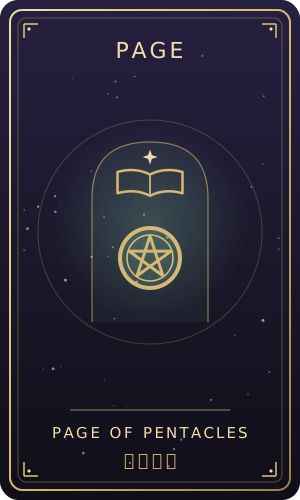
Page of Pentacles: The dedicated student
The Page of Pentacles shows a young person gazing intently at a coin. It's a card of learning, new skills and practical beginnings. Upright, it says steady effort is adding up. Reversed, it can point to thinking more than doing, with plans stuck at the starting line. Its most useful advice: break the big goal into something you can finish today.
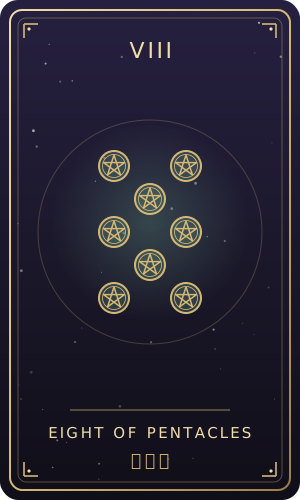
Eight of Pentacles: Practice papers and revision
The craftsman in the Eight of Pentacles carves one coin after another, a lot like working through past papers. Upright, consistent effort is paying off. Reversed, repetition may be wearing you down, or perfectionism has you rewriting the same notes instead of moving on.
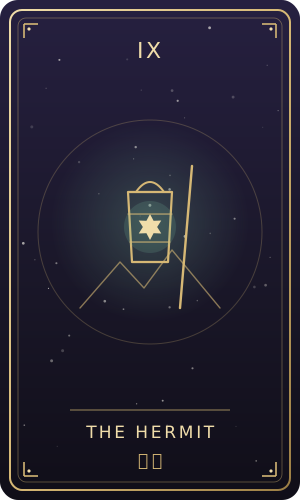
The Hermit: A quiet rhythm for study
The Hermit walks alone with his lantern. He suits the focused stretch before an exam: phone in another room, one regular study spot, fewer distractions. Reversed, he reminds you that focus isn't the same as isolation. When you're stuck, ask a teacher or classmate.
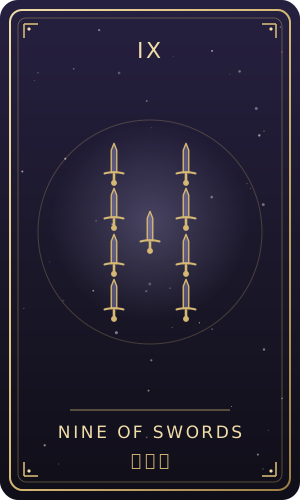
Nine of Swords: Exam anxiety
The Nine of Swords shows someone sitting up in bed at night, face in hands. It's the card that frightens students most, yet it describes worry, not results. It says you're anxious, and that many fears aren't facts. Write your worries down and sort them into "things I can do something about" and "things I'm imagining." That alone often brings relief.
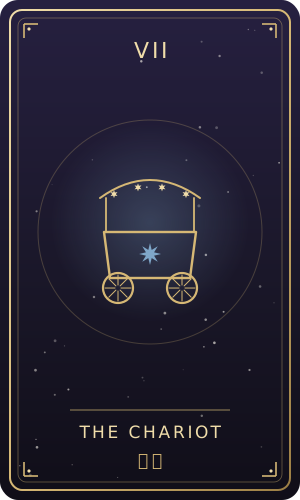
The Chariot: Focus and willpower on the day
The Chariot is about moving toward a goal through determination and self-discipline. Upright, it's a good card for the final push: hold your pace and trust your preparation. Reversed, it can mean unclear direction or forcing too hard. Recheck the goal before charging ahead.
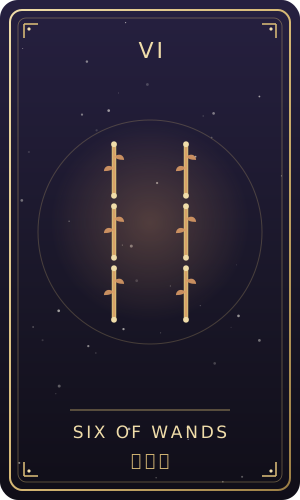
Six of Wands: Effort that gets noticed
The Six of Wands shows a rider receiving applause. It's a card of recognition and good news. Enjoy it, but read it as encouragement that your work deserves to be seen, not as a promise of a pass. Reversed, it may point to worrying too much about what others think, or doubting you're good enough.
Match the Reading to the Countdown
How you use tarot should change as the exam gets closer:
- Start of term, or three or more months out: Use the Past, Present, Future spread to look at how your studying is going and set an overall plan.
- One month out: Draw one card each morning as a study prompt, then write down one specific task for the day. The three-card Daily Direction spread works well too.
- One week out: Do a single reading focused on adjusting your routine and mindset. Stop asking about the result.
- The night before: Don't draw. You need sleep and confidence, not more uncertainty.
- Waiting for results: Ask what this exam taught you and what you can prepare next, rather than redrawing the same question every day.
Different Exams, Different Questions
Every kind of exam has its own rhythm, so tailor the question to it:
- University entrance or high school placement exams: Long preparation, many subjects. Ask "Which subject needs its study time rearranged?" or "Where is my plan too crowded?"
- Civil service and professional certification exams: Many people prepare while working, so time and energy are tight. Ask "How can I find a sustainable rhythm between work and study?"
- Language tests: Progress comes from daily habits. Ask "Which of listening, speaking, reading or writing is weakest right now?" or "With fifteen minutes a day, what should I practice first?"
- Midterms and finals: Short timeline, short question: "Which subject should I tackle first this week?"
If you're preparing to retake an exam, start with "What is worth keeping from last time?" and plan from there. Keep the focus on what you can adjust, and the cards have something to work with.
A Three-Card Pre-Exam Check-In
The Strengths & Obstacles spread on ORAE is ideal before an exam: one card for the strength you can rely on, one for the obstacle to watch, and one for advice. Here's an example:
- Strength: Eight of Pentacles. Your practice is real. Keep working through your plan.
- Obstacle: Nine of Swords. What's holding you back is anxiety and lost sleep, not ability.
- Advice: The Hermit. Keep a quiet, phone-free block each day, and stop scrolling through other people's progress at bedtime.
Turned into actions, that's: keep your practice schedule, set a fixed bedtime and cut down on comparison. That's far more useful than a yes or no.
What If You Draw a Card That Worries You?
Take a breath. Challenging cards point to something to adjust, not a verdict on your ability. The Eight of Swords, for instance, often describes being trapped by your own thoughts, with the way out closer than it seems. A reversed Eight of Pentacles suggests trying a different study method, not giving up.
If anxiety is affecting your sleep, appetite or daily life, talk to family, friends or a school counselor, and seek professional support if you need it. Saying it out loud is already a way of looking after yourself.
Try It on ORAE
ORAE Tarot is completely free, needs no sign-up, and every draw uses a cryptographically secure shuffle. Interpretations come from fixed, transparent rules rather than AI. For a full check-in before an exam or interview, try the interview and exam reading. To build a daily habit, start with the daily reading or follow the 30-day one-card practice, and keep notes alongside your study log with the tarot journal guide.
A final word: tarot can help you settle your nerves and sort out your priorities, but what carries you into the exam room with confidence is the preparation you do, a little at a time, every day. Good luck.
FAQ
Is it okay to do a tarot reading before an exam?
Yes. Drawing cards won't change your luck, and card meanings don't shift because an exam is coming. Do your reading at least a week before, focus on preparation and mindset, and skip the cards the night before so you can rest.
Can tarot predict whether I will pass?
It can't guarantee anything. Results depend on your preparation, the paper and how you feel on the day, among other things. Tarot is better at showing your strengths and the areas worth more attention, so you spend your study time where it counts.
I drew the Nine of Swords before my exam. Does that mean I will do badly?
No. The Nine of Swords describes worry and sleepless nights, not your result. It's a cue to look after your sleep and emotions and to separate real problems from imagined ones. If anxiety is affecting daily life, talk to someone you trust or a school counselor.
Can I draw a card every day while I study?
Yes, as a daily study prompt. Draw one card, then write down one task to finish that day. Avoid asking "Will I pass?" every day; it tends to feed the anxiety you're trying to calm.
Should I keep asking the same question while I wait for results?
We don't recommend it. Redrawing the same question usually means searching for the answer you want to hear. Ask what you can do while you wait, and prepare your next options. It will feel much steadier.
Try a reading on ORAE
Free, no sign-up, no AI: fixed, transparent interpretation rules.