Drew a "Bad" Tarot Card? What to Do Next
· 6 min read
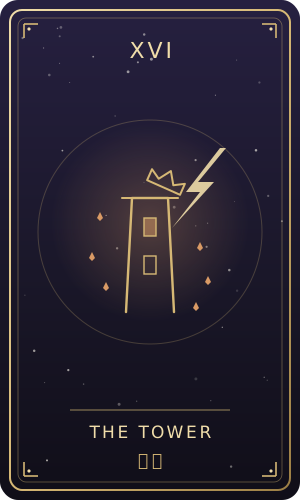
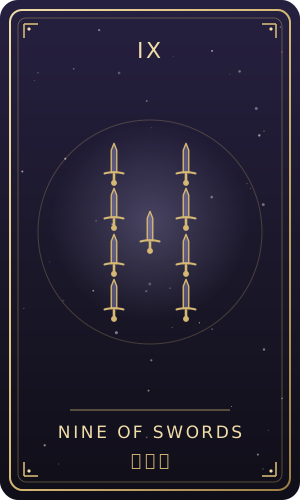
Pulled the Tower or the Nine of Swords and felt your stomach drop? This guide skips the card meanings and focuses on what to do next: reading the card as information, checking position and context, drawing an advice card and turning it into action.
The card flips over and it's the Tower, the Nine of Swords or the Ten of Swords. Your stomach drops: is something bad about to happen? That jolt is real, but a difficult card is not a bad future. This guide doesn't re-explain what Death, the Tower and the Devil mean (for that, see the scariest tarot cards). It focuses on what to do next: how to settle your mind, how to read the card more fully and how to turn a frightening card into something you can actually do today.
First, Breathe: Feeling Rattled Is Normal
Humans are wired to react more strongly to bad news than to good news of the same size, a tendency psychologists call negativity bias. That is why one Tower can drown out two gentle cards beside it.
Remind yourself of three things:
- The draw is random. On ORAE, every reading shuffles the full 78-card deck with secure randomness, a hash of the seed is shown before you draw, and the question you type has no effect on which cards appear. No card was placed there to scare you.
- Tarot is not a verdict. It describes where things stand and where they may be heading, not a fixed ending. More in Is Tarot Accurate?
- You still have choices. A reading says, "If things keep going this way, here's what you may meet." You can change the way things are going.
Treat a "Bad" Card as Information, Not a Sentence
Difficult cards usually point to where your attention is needed, like a warning light on a car dashboard. The light doesn't mean the car is about to break down; it means something needs checking.
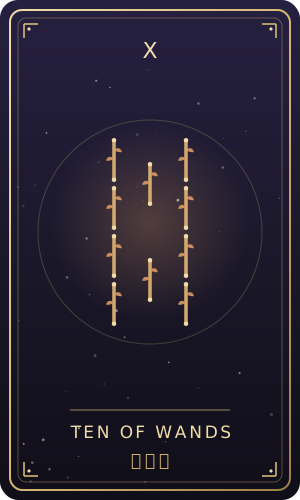
Say you ask about work and draw the Ten of Wands. Rather than "my job is doomed," read it as "I'm carrying too much." That is genuinely useful: it tells you to take stock of your tasks and share the load.
For any card that makes you tense, ask three questions:
- What is this card asking me to notice?
- Which part of this situation can I influence?
- Is it describing something that has happened, or something I'm afraid of?
One more observation: many of the minor cards people fear most are Swords, such as the Three, Eight, Nine and Ten of Swords. Swords are the suit of thought, so these cards often describe a state of mind, like worry, self-imposed limits or worst-case imagining, rather than events that must happen out in the world. Seeing that can take half the fear out of them.
Check the Position and Context
The same card means very different things in different positions. Take the Tower:
| Position | The Tower here might mean |
|---|---|
| Past | An upheaval that already happened and still shapes today |
| Present | Something that looked solid is coming loose |
| Challenge or Obstacle | Holding things together by force is what's stuck |
| Advice | Tell the truth; stop propping up what isn't stable |
| Future or Outcome | On the current path, a change will need facing |
Death works the same way. In the Advice position it isn't announcing bad news; it suggests closing a finished chapter with gratitude and clearing space for something new.
Then look at the neighbors. If a hard card sits next to healing cards like the Star or the Six of Pentacles, the story often reads "through this, then better." See card combinations for how cards modify each other. And keep the topic in mind: the Three of Swords is heartache in love, but at work it may just be disappointing news.
Reversals: Not Always Worse
Many people see a difficult card reversed and assume it's doubly bad. In fact, several hard cards reversed suggest things are easing:
- Three of Swords reversed: gradual healing, coming out of a low.
- Nine of Swords reversed: anxiety easing, reaching out for help.
- Ten of Swords reversed: recovering and getting back up.
- Five of Pentacles reversed: leaving hard times behind, accepting help.
- The Devil reversed: waking up and breaking free.
There are exceptions. The Tower reversed often means a delayed upheaval, a problem still being held down. See upright and reversed cards for the full picture. If reversals stress you out while you are learning, choose "Upright only" in ORAE's reading options and get comfortable with upright meanings first.
Draw an Advice Card: From "What Will Happen?" to "What Can I Do?"
Instead of asking "Will it get worse?", start a new reading with a different question: "What can I do first in this situation?" Use a single card, the two-card Situation and Advice spread or the three-card Strengths & Obstacles spread.
ORAE's results always end with an Action Steps section, and at Deep or Expert depth every card, difficult ones included, also gets its own Advice line. The Nine of Swords suggests writing down the thoughts keeping you awake and sorting facts from fears; the Ten of Wands suggests listing your responsibilities and handing off at least one today. Reading that line first often shows you the next step.
When Not to Redraw
An advice card is a new question. A redraw is asking the same question again in the hope of a nicer card. Hold off on redrawing when:
- Nothing has changed except that you didn't like the result.
- You've already asked the same thing today.
- You've decided in advance that only a good card will count.
On ORAE, each reading is drawn once, and refreshing returns the same cards. More in asking tarot the same question twice.
Scary Cards and the Question to Ask Next
| Card | What it often flags | A constructive question |
|---|---|---|
| Death | Endings, transformation | What has run its course, and how can I say goodbye well? |
| The Tower | Sudden change, truth revealed | Which ignored problem needs my attention now? |
| The Devil | Attachment, feeling bound | What makes me feel I can't leave, and what choices do I still have? |
| Ten of Swords | Rock bottom, a cycle ending | What do I need to stop enduring so I can start to recover? |
| Three of Swords | Heartache, a painful truth | How does this sadness need me to care for it? |
| Nine of Swords | Anxiety, worst-case thinking | Which of my worries are facts, and which are imagined? |
| Eight of Swords | Feeling trapped, self-limiting | Which limits are real, and which are just my thoughts? |
| The Moon | Uncertainty, unease | What information am I missing, and where can I check? |
| Five of Cups | Loss, regret | Besides what I lost, what is still here for me? |
| Five of Pentacles | Scarcity, feeling left out | Who could I ask for help, and what resources haven't I used? |
| Ten of Wands | Burden, too much responsibility | What one thing can I put down or hand to someone else? |
Use these as the question for your next reading, or simply write one down and answer it yourself.
Turn One Card Into One Concrete Action
What matters most after a reading is what you do next. Try these five steps:
- Note it down: the card, its position and your first reaction.
- Name the reminder in one sentence, using the table above.
- Find what you can influence: what you can do, ask or adjust.
- Write one small action you can take within 24 hours. The more specific, the better.
- Set a check-in: come back in a week and see what actually happened.
Fictional example: Mia asks, "What should I watch for at work this month?" and draws the Nine of Swords upright. Her first thought is "this is bad." Following the steps: the card says worry is crowding her mind so she can't rest; it isn't predicting disaster. What she can influence is how she handles the worry. Her small action: spend ten minutes tonight listing what she's anxious about, marking each item "fact" or "guess," then pick one thing she can check and ask her manager directly tomorrow. A week later, most of the list turns out to have been guesses, and only one item needed real attention.
Write It Down and Look Back in a Week
Recording difficult cards is the best way to get comfortable with them. Note the date, question, card and position, first reaction, what you did and what happened a week later. When you are signed in to ORAE, you can write in "My notes" on the results page or tap "Add to journal" to keep a tarot journal; see how to keep a tarot journal. After a few entries, you may notice that many "bad" cards simply pointed early to something you could handle.
Look After Yourself When a Reading Leaves You Shaken
If a card has you on edge all day, care for yourself first and the card second:
- Stop drawing for today. Pulling card after card to soothe yourself usually backfires.
- Do something that steadies your body: drink some water, take a walk, eat a proper meal.
- Talk to someone. Saying a worry out loud often makes it lighter.
- Don't make big decisions at a low point. Come back to the card when you feel calmer.
Tarot is a tool for reflection, not a substitute for professional help. If you are anxious or sleepless for a long stretch, or have thoughts of harming yourself, please reach out to a local crisis line, a mental health professional or emergency services.
Practice Living With Difficult Cards on ORAE
ORAE is free, needs no account and uses no AI: interpretations come from hand-written meanings combined by fixed rules. To practice meeting any card calmly, draw one card each day as a small prompt, and when you have a real question, start a free online tarot reading. If your mood could use some balance, read about the luckiest tarot cards. A difficult card is one paragraph of the story; how the next part goes is still up to you.
FAQ
Does drawing a bad tarot card mean something bad will happen?
No. Tarot describes where things stand and where they may be heading, not a fixed outcome. Difficult cards work more like warning lights that show where to pay attention. Turning one into a small, concrete action helps far more than worrying about whether it will come true.
Can I redraw right away if I get a bad card?
It's better not to redraw the same question immediately; that usually becomes a search for the answer you want. Instead, start a new reading with a different question, such as "What can I do first?", or wait until the situation has actually changed.
Is a difficult card even worse when it is reversed?
Not necessarily. The Three, Nine and Ten of Swords and the Five of Pentacles reversed often show things easing or recovery beginning, and the Devil reversed is breaking free. The Tower reversed, though, often means a delayed upheaval. Read the card, position and question together.
What is an advice card and how do I draw one?
An advice card answers "What can I do?" Start a new reading and use a single card or the Situation and Advice spread. ORAE's results also end with an Action Steps section, which is a good place to begin.
What should I do if a reading leaves me upset?
Stop drawing for now and do something steadying, like walking, drinking water or talking with a friend, and avoid big decisions while you feel low. If anxiety, sleeplessness or thoughts of self-harm persist, reach out to a crisis line or a mental health professional.
Try a reading on ORAE
Free, no sign-up, no AI: fixed, transparent interpretation rules.