How to Choose an Online Tarot Site: 8 Checks and Common Traps
· 6 min read
So many tarot sites claim to be free and accurate. Here are eight checks you can run yourself, covering cost, sources, AI versus rules, privacy, draw transparency, consistency, sales pressure and history, plus common traps and a quick checklist.
Search for an online tarot reading and you'll find page after page of sites and apps, each promising to be free and accurate. How do you choose? This guide doesn't rank anyone. Instead it gives you eight checks you can run yourself, a look at the most common traps and a checklist at the end. Use it on any site, including ours.
First: What Can "Accurate" Online Tarot Really Offer?
The first question most people ask is which site is the most accurate. But no site, online or in person, can guarantee a prediction; we explain why in Is Tarot Accurate? A more realistic standard has three parts: a fair draw, reliable card meanings and a process that helps you think clearly. The eight checks below all serve those three goals. For a broader comparison of online and in-person readings, see online tarot vs in-person readings.
Checks 1 and 2: Is It Really Free? Where Do the Meanings Come From?
1. Is it really free?
"Free" means different things. One card free and a paid full reading; a free result that's only complete once you add an account on a messaging app; credits or subscriptions that unlock sections. Charging isn't wrong in itself, because sites have running costs. What matters is transparency: is the price clear before you start, or does a paywall appear halfway through your result?
How to check: look for a page that says what's free, what isn't and how the site pays its bills.
2. Where do the meanings come from?
A good site covers all 78 cards with both upright and reversed meanings, consistent with the Rider-Waite-Smith tradition. Look for any note on how the meanings were written and revised, and check whether the same card is described consistently from page to page.
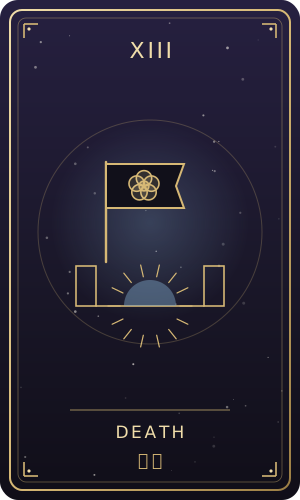
A quick test: look up Death. The standard reading is an ending and transformation that clears space for something new. If a site presents it as literal death or disaster, be wary.
Check 3: AI, Fixed Rules or a Human?
| Approach | Strengths | Limits |
|---|---|---|
| AI-generated | Fluent, responds to the details of your question | The same cards may read differently each time, and it can produce plausible-sounding text that departs from traditional meanings |
| Fixed rules plus human-written meanings | Consistent and traceable, never improvises | More general wording, no follow-up questions |
| Human reader | Two-way conversation, adapts to you | Quality varies, usually costs money, carries personal views |
None of these is automatically better. What matters is whether the site tells you clearly which one it is. If its help pages don't say, two clues help: whether the same cards produce different wording each time you look, and whether the reading says things you can't find on the site's own card pages. We compare the two online approaches in AI Tarot vs Rule-Based Readings.
Check 4: Privacy: Does It Need Your Name and Birthday? Can You Delete Data?
Tarot itself doesn't need your birthday or birth time. If a site wants your full name, date of birth and phone number before you can draw a few cards, ask whether the reading genuinely needs that. Then check:
- Is an account required? Can you try it without logging in?
- Is your question private by default? When you share a result, can you leave the question out?
- Can you delete things? A single reading, your whole account, an export of your data?
- Is there a privacy policy? Does it say where your data is stored and what it's used for?
On any tarot site, never enter an ID number, bank details, passwords or one-time verification codes. None of them has anything to do with a reading.
Checks 5 and 6: Is the Draw Transparent? Are Results Consistent?
5. Is the draw transparent?
Does the site explain how it shuffles? Is the deck shuffled and hidden before you choose? Does the question you type affect which cards appear? Is there any verification data you can check afterwards? If a site says nothing at all, you have no way of knowing whether results are arranged. We explain the mechanics in how an online tarot draw works.
6. Are results consistent?
Try refreshing the result page. If the cards change, you can redraw until you like the answer, which empties the reading of meaning; see asking tarot the same question twice. Also check that the same card in the same position reads the same way, and that a daily card stays fixed for the day.
Checks 7 and 8: Sales Pressure? Can You Look Back?
7. Is there sales pressure or fear?
You finish a reading and the screen announces "a serious crisis in your love life" that "needs a master's attention", followed by a payment button. That's the classic warning sign, along with countdown timers and "only one slot left". A trustworthy site uses balanced language, explains tarot's limits and includes a disclaimer.
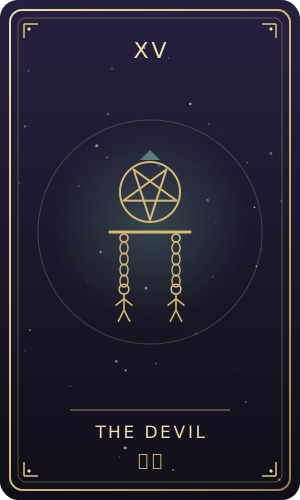
If a site leaves you more anxious and less able to decide for yourself, it's closer to the chains of The Devil, being held in place by fear, than to guidance. Noticing those chains is the first step to taking your choices back.
8. Can you save and revisit readings?
The value of a reading often only shows a few weeks later, when you look back. A useful site lets you keep a history, add notes and favorites, and share stable links, and a result page should have an address you can bookmark and find again. For a method, see how to keep a tarot journal.
Common Traps: "Curse Removal" and Four Lines to Watch For
- Paid fixes for bad luck. First you're told your cards look terrible, then you're offered a ritual to fix it. Tarot cards don't curse anyone, and no card ever needs paying to undo.
- Free reading, then private messages. A "free" offer moves you to a messaging app, where a "personal reading" suddenly needs a bank transfer or gift cards.
- Unverifiable accuracy claims. Figures like "98% accurate" can't be checked. Treat them as advertising.
- Manufactured dependence. Being told to consult them before every decision, or not to talk things over with friends and family.
If something feels off, stop paying, keep your messages and receipts, talk to someone you trust and contact your local fraud reporting service if needed. Our guide to tarot reading prices covers what fair pricing for human readers looks like.
Online Tarot Site Checklist
| Check | Reassuring sign | Warning sign |
|---|---|---|
| 1 Cost | Pricing stated up front, or a clear explanation of why it's free | Payment demanded halfway through a result |
| 2 Meanings | All 78 cards, upright and reversed, described consistently | Gaps, contradictions or deliberately scary wording |
| 3 Method | Says whether it's AI, rules or a human | No explanation of where text comes from |
| 4 Privacy | Try without an account, delete your data | Full name, birthday and phone for a single card |
| 5 Draw | Shuffle explained, verification data offered | Nothing explained |
| 6 Consistency | Refreshing keeps the same cards | Every refresh brings a new result |
| 7 Tone | Balanced language, limits stated | Fear, pressure, paid fixes |
| 8 History | Save, note and favorite readings | Close the tab and everything is gone |
The five-minute test drive
A table only goes so far; trying a site tells you more. Pick a small question you care about but aren't anxious over, then:
- Find the help or about page. How does it explain cost, interpretation and privacy?
- Do one reading without logging in. Are you asked for personal details or to add an account somewhere along the way?
- Refresh the result page. Did the cards change?
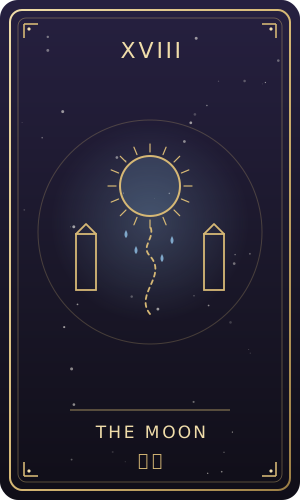
- Look up two cards you know. Try Death and The Moon: are the meanings balanced, or do they play up fear?
- Read the end of the result. Is there a disclaimer, or a button to pay for a fix right after it?
- Look for delete and share settings. Can you delete this reading? Can you share it without your question?
Those six steps take about five minutes and tell you more about a site than a page of glowing reviews.
Running the Same Checklist on ORAE
Applied to ORAE, the checklist comes out roughly like this:
- Cost: free, with no paid tiers, credits or add-on services; see how ORAE stays free.
- Meanings and method: upright and reversed meanings for all 78 cards, written by people in the Rider-Waite-Smith tradition. No AI: readings are assembled by fixed rules, and each reading records the meaning and rule versions it used.
- Privacy: read without an account. Signing up needs only a display name, email and password, and a birthday is optional. Questions are private by default, shared links leave the question out unless you opt in, and you can delete a reading, export your data or delete your account.
- Draw and consistency: a secure random shuffle, with the seed hash and seed on the result page. Each reading is drawn once, so refreshing shows the same cards.
- History: members get a reading history, notes, favorites and a tarot journal.
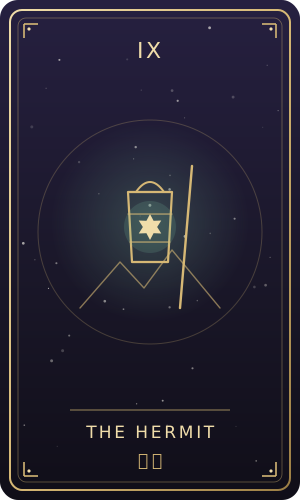
And the honest limits. Rule-based text is more general than a conversation, you can't ask follow-up questions, and the work of connecting a meaning to your situation is yours. When things are complicated and you want someone to talk it through with, a human may serve you better. Like The Hermit carrying his own lantern, the final judgement stays with you, however good the tool. To try it, start an online tarot reading.
FAQ
How do I find an accurate online tarot site?
No site can guarantee predictions. Look instead for a fair, transparent draw, complete and consistent meanings, balanced language without fear tactics, and the ability to save readings and look back. Those tell you more than any claimed accuracy rate.
Is AI tarot better than rule-based tarot?
Each has trade-offs. AI is fluent and responsive but may say something different each time for the same cards. Rule-based readings are consistent and traceable but more general. The key is whether the site says clearly which one it uses.
A tarot site wants my birthday. Is that safe?
Tarot itself doesn't need your birthday. If a site asks, check whether it explains why, whether the field is optional and whether you can delete your data. Never give an ID number, bank details, passwords or verification codes.
My reading says I need to pay to remove bad luck. What should I do?
Stop and don't pay. Tarot cards don't curse anyone, and no card needs a paid fix. Keep the messages and payment records, talk it over with someone you trust and contact your local fraud reporting service if needed.
Can I trust a free online tarot site?
Free does not mean low quality. The pattern to avoid is free first, then fear. If pricing is transparent, the language is balanced and you can delete your data, a free site can be a genuinely useful tool for reflection.
Try a reading on ORAE
Free, no sign-up, no AI: fixed, transparent interpretation rules.