How to Learn All 78 Tarot Card Meanings in Four Weeks
· 6 min read
Seventy-eight cards plus reversals feels like too much to memorize. A four-week plan makes it manageable: the Majors as a story, suits as elements, numbers as stages, courts as roles, plus image work and spaced review.
"Seventy-eight cards, upright and reversed? I'll never memorize all that." It's the most common complaint from new tarot learners, and the good news is you don't have to memorize card by card. Tarot is a structured system: the 22 Major Arcana form a story, and the 56 Minor Arcana are built from suits, numbers and roles. This four-week plan takes about 15 minutes a day and uses ORAE's free tarot flashcards and meanings cheat sheet to make the deck your own.
How to Memorize Tarot Meanings: Four Systems, Not 78 Definitions
Seventy-eight cards times two orientations looks like 156 meanings. Grasp the structure and you really only need four systems (see Meet the 78 Cards for an overview):
| Group | Cards | How to remember them | Week |
|---|---|---|---|
| Major Arcana | 22 | The Fool's Journey as one story | 1 |
| Number cards (Ace to Ten) | 40 | Suit = element, number = stage | 2 |
| Court cards | 16 | Rank = role, colored by suit | 3 |
| Everything | 78 | Image work plus spaced review | 4 |
You don't need 78 separate reversed meanings either. Learn the upright card, then apply the four approaches in Upright and Reversed: blocked or delayed, turned inward, too much or too little, or moving out of it. Most reversals follow.
The Daily 15-Minute Routine
Use the same routine every day for four weeks. Consistency beats the occasional marathon:
| Minutes | What to do |
|---|---|
| 0–3 | Review: quiz yourself on earlier cards with flashcards or your missed-card list |
| 3–10 | New cards: look at the image for a minute, read the meaning, write one keyword chain |
| 10–13 | Say it out loud: one sentence or mini-story using today's cards |
| 13–15 | Real-world test: open your Daily Card, guess its meaning from the rules, then check |
The Daily Card stays the same all day, so it makes a natural daily quiz. To turn it into a lasting habit, see Daily One-Card Tarot: A 30-Day Practice.
Week 1: The Major Arcana as One Story
Don't memorize definitions; remember who the Fool meets along the way. Lay out I to XXI in three rows of seven and tell each row as a short story (the Major Arcana lesson has the full background):
- Row one (I–VII), the outer world. The Fool sets out with an empty pack. He meets the Magician, who knows how to use his tools, and the High Priestess, who listens to intuition. The Empress nurtures him, the Emperor teaches him rules, the Hierophant gives him a tradition, the Lovers ask for his first real choice, and the Chariot carries him toward a goal.
- Row two (VIII–XIV), the inner world. He tames his inner lion with gentleness (Strength), takes a lamp into solitude (The Hermit), sees life rise and fall (Wheel of Fortune), faces the consequences of choices (Justice), hangs upside down to see differently (The Hanged Man), lives through an ending (Death) and learns to blend opposites (Temperance).
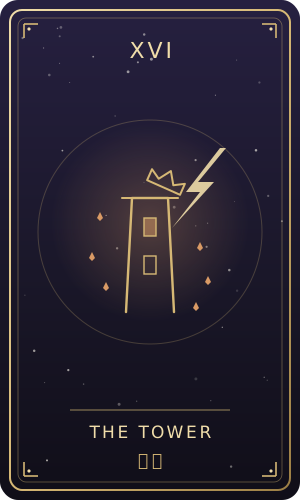
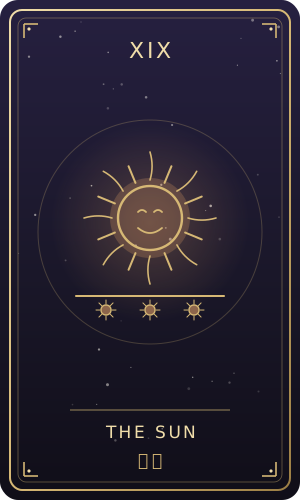
- Row three (XV–XXI), spirit and transcendence. He sees the chains he wears (The Devil), watches a false tower fall (The Tower), finds hope in the night sky (The Star), walks through fog and fear (The Moon), meets simple joy (The Sun), hears a wake-up call (Judgement) and completes the circle (The World).
| Day | Cards | Practice |
|---|---|---|
| 1 | 0 The Fool to VII The Chariot | Study images and meanings; rewrite row one in your own words |
| 2 | VIII Strength to XIV Temperance | Same, row two |
| 3 | XV The Devil to XXI The World | Same, row three |
| 4 | All 22 | Tell the whole story from memory; flag any card you stall on |
| 5 | All 22 | Flashcards, practice set "Major Arcana," name-the-card mode |
| 6 | All 22 | Switch to guess-from-keywords mode |
| 7 | Review | Drill only the flagged cards and try working out their reversals |
Week 2: Number Cards = Suit × Number
The 40 number cards are four suits times ten stages. Start with the suits (more in The Four Suits): Wands are Fire (passion, action, creativity), Cups are Water (feelings, relationships, intuition), Swords are Air (thought, communication, conflict) and Pentacles are Earth (money, work, the body and practical life).
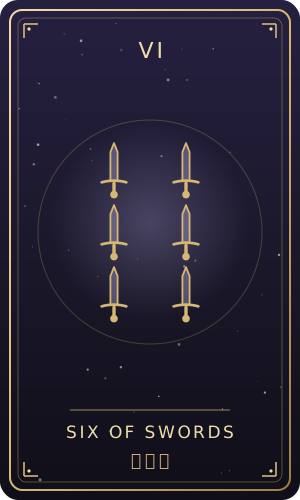
Then the stages (more in Number Symbolism): Ace is the seed, Two balance and choice, Three growth and expression, Four stability, Five change and challenge, Six harmony and recovery, Seven reflection, Eight momentum and mastery, Nine nearing fulfillment, and Ten completion and transition.
Build Keyword Chains
A keyword chain runs suit + number → what the image shows → meaning:
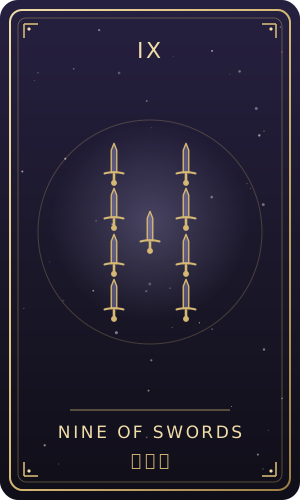
- Nine of Swords: thoughts (Air) + the anxiety before an ending (Nine) → a figure sitting up in bed, face in hands → anxiety, sleeplessness, catastrophizing.
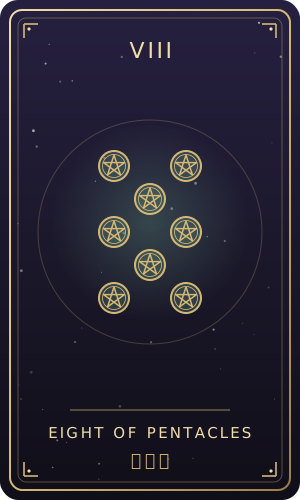
- Eight of Pentacles: work (Earth) + mastery (Eight) → a craftsman carving coins → skill-building, diligence.
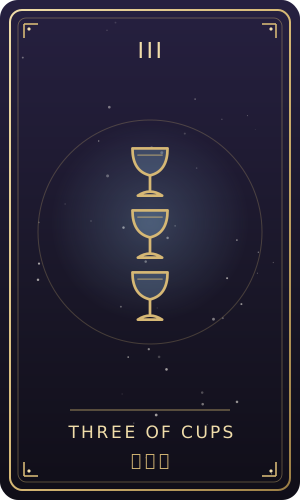
- Three of Cups: feelings (Water) + growing into a group (Three) → three women dancing with raised cups → friendship, celebration.
- Ten of Wands: action (Fire) + the end of a cycle (Ten) → a man bent under ten wands → burden, overcommitment.
| Day | Cards | Practice |
|---|---|---|
| 8 | The four suits and four Aces | A keyword chain for each Ace |
| 9 | Twos and Threes (8 cards) | Compare one number across the four suits |
| 10 | Fours and Fives (8) | Same |
| 11 | Sixes and Sevens (8) | Same |
| 12 | Eights, Nines and Tens (12) | Same |
| 13 | All 40 | One flashcard round per suit |
| 14 | Review | Start an "exceptions list" of cards the formula doesn't explain |
The exceptions list matters. The formula takes you far, but some cards live in their image. By the formula, the Eight in the Eight of Swords should mean momentum, yet the card shows a blindfolded woman hemmed in by swords: the point is self-limitation. Don't force it; remember the picture, including her feet, which are free.
Week 3: Court Cards = 16 Roles
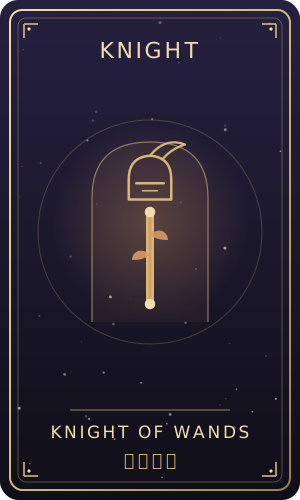
Court cards show people, so learn them as roles (see The Court Cards): the Page is the student and messenger, the Knight is the doer charging ahead, the Queen masters inwardly and nurtures through understanding, and the King masters outwardly and decides from experience. Add the suit and you have 16 personalities: the Knight of Wands is the adventurer who leaves before the plan is finished; the Queen of Cups is the warm, empathetic listener.
| Day | Cards | Practice |
|---|---|---|
| 15–18 | The four Pages, then Knights, Queens, Kings | Write one line each card might say |
| 19 | One suit's whole family | Compare how maturity grows from Page to King |
| 20 | All 16 | Casting: match each card to a character from film, books or cartoons |
| 21 | Review | Flashcards on "All 78 cards" to see which group still trips you up |
Keep the casting game in your own notes; there's no need to label real people around you.
Week 4: Image Work and Spaced Review
No new cards this week. The goal is to make all 78 stick.
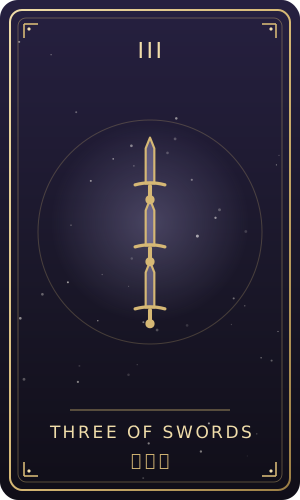
Image first. Each day, cover the names of three cards and ask: What is the figure doing? What do the weather, colors and background suggest? If this were a film still, what happened a second before and after? The Three of Swords has no figure at all, just a heart pierced by three swords in the rain, and the meaning is practically written on it: heartache and grief. When a keyword slips, the image usually remains.
Spaced review. Psychologists call it the spacing effect: the same amount of practice spread over several days usually sticks longer than one long cram. Keep a missed-card list, review each entry one, three and seven days later, and cross it off once you get it right repeatedly. ORAE's flashcards track your score, streak and best streak, but they don't schedule reviews, so the list is yours to keep.
| Day | Practice |
|---|---|
| 22 | Flashcards, all 78, name-the-card mode; log misses |
| 23 | Guess-from-keywords mode; log misses |
| 24 | Print the cheat sheet, cover the keywords, say each meaning aloud |
| 25 | Image work on five cards plus your first review round |
| 26 | Draw three cards and read Past · Present · Future without notes |
| 27 | Second review round plus three image studies |
| 28 | Draw 20 random cards, state each meaning, check against the sheet |
Common Sticking Points
- Too many at once. Eight to twelve new cards a day is plenty.
- Keywords without images. Keywords blur together; pictures are the hooks memory hangs on.
- Books that disagree. Pick one Rider-Waite-Smith source and stick with it first. ORAE's meanings are one consistent reference.
- Knowing but not using. Use your Daily Card to put meanings into real life.
After Four Weeks: From Remembering to Reading
You won't recall every sentence, but you'll be able to say roughly what any card means, and that's enough to start reading. Next, walk through a full reading in seven steps with a free online tarot reading, or sharpen specific skills with ten tarot practice exercises. And remember why you're learning: tarot offers new angles on your situation, not guarantees about the future.
FAQ
How long does it take to learn tarot card meanings?
It varies. With about 15 minutes a day on this plan, most learners can give a rough meaning for every card after four weeks. Reading fluently takes ongoing practice with real readings and review.
Do I need to memorize reversed meanings separately?
No. Learn the upright meaning well, then reason out the reversal: blocked or delayed, turned inward, too much or too little, or moving out of a hard place. Check the card page for any that do not fit.
Should I learn the Major or Minor Arcana first?
Start with the 22 Major Arcana. Their images are the most story-like and the Fool's Journey links them together. Then learn the 40 number cards by suit and number, and finish with the 16 court cards.
How do I combine the flashcards and the cheat sheet?
Use the flashcards to test yourself by image or by keywords, and the cheat sheet to review, printed out with the keyword columns covered. Log the cards you miss and revisit them a few days later.
Try a reading on ORAE
Free, no sign-up, no AI: fixed, transparent interpretation rules.