How to Read Tarot: A Full Reading in Seven Steps (With an Example)
· 6 min read
You can look up any card, but where does a whole reading begin and end? This guide breaks one reading into seven steps and follows a single five-card example from question to written record.
Once you have spent a little time with tarot, you notice that card meanings are easy to find. The hard part is running a reading from beginning to end. This guide skips the theory and breaks one complete reading into seven steps, following a single example from the question to the final notes. You can follow along with your own deck, or practice with a free online tarot reading on ORAE.
How to Use This Guide
The concepts already have their own lessons in the academy: see Tarot Basics and Meet the 78 Cards for the structure of the deck, and Upright and Reversed for reversals. This page is only about the order of work:
| Step | What you do | Rough time |
|---|---|---|
| 1 | Clarify the question | 3–5 min |
| 2 | Choose a spread | 1–2 min |
| 3 | Shuffle and draw | 2–3 min |
| 4 | Read each card in its position | about 10 min |
| 5 | Look at the whole picture | 3–5 min |
| 6 | Synthesize a story and advice | 5–10 min |
| 7 | Record it and review later | 5 min, then later |
The person, question and cards below are a fictional example made for teaching, not a real reading. Card meanings follow the ORAE card database.
Step 1: Clarify the Question
Example: Mia and Jess were university roommates and have stayed best friends in the five years since graduating. Since Jess changed jobs, they talk less and less. At a get-together last month, Mia brought up an old embarrassing story about the two of them, Jess reacted coolly, and neither has messaged since.
Mia's first question was "Can Jess and I still be close friends?" That can only be answered yes or no, and it hands the answer to someone else. Three quick checks help:
- Focus on yourself. Ask what you can do, not what the other person secretly thinks.
- Keep it open. Start with "how" or "what" so every card has something to say.
- Add a time frame. "Over the next month" keeps the reading focused.
Her rewritten question: "Over the next month, how can I approach and nurture my friendship with Jess?" For more on wording, see How to Ask Tarot Good Questions.
Step 2: Choose a Spread
A spread decides in advance what each card is answering. Pick one by the angles your question needs:
| Question type | Good spread |
|---|---|
| A quick check or daily reminder | Single Card |
| How things got here and where they're going | Past · Present · Future |
| What to do about it | Situation · Action · Outcome |
| Torn between two options | A/B Choice |
| Obstacles and blind spots together | Five Card Deep Dive |
Mia wants to know what's blocking her and what she might be missing, so she chooses the Five Card Deep Dive. Its positions are Present, Challenge, Hidden Influence, Advice and Likely Outcome. Write the positions down before drawing so you can't quietly redefine them once you see the cards. The spread guide covers how to choose in more detail.
Step 3: Shuffle and Draw
With a physical deck, hold the question in mind while you shuffle, cut when it feels right, and lay the cards in position order. Decide before shuffling whether you'll read reversals. How to shuffle and cut tarot cards has practical tips.
On ORAE, choose a theme (here, "Relationships"), type your question and pick a spread. Under "Reading options" choose a drawing method (Auto shuffle & deal, Pick by hand or Interactive cut), reversals (Include reversed at 50% each, or Upright only) and a reading depth, then press "Shuffle the deck." All three drawing methods give every card exactly the same chance, so use whichever pace you enjoy.
Either way, draw once per question. Redrawing until you like the result just selects the answer you wanted. Mia's cards:
| Position | Card | Orientation |
|---|---|---|
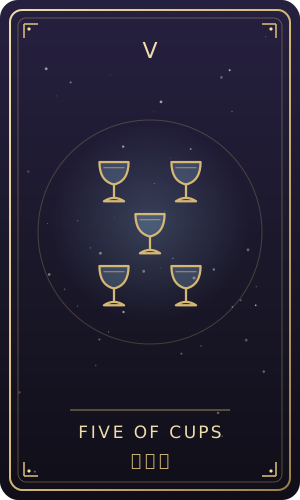
| Present | Five of Cups | Upright |
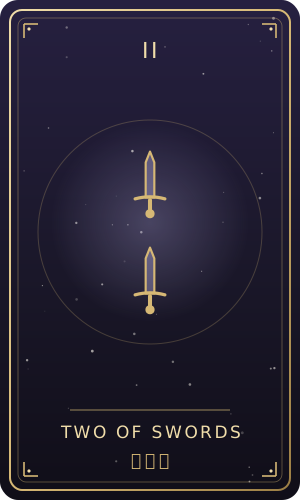
| Challenge | Two of Swords | Upright |
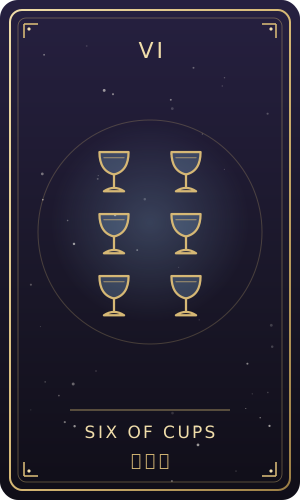
| Hidden Influence | Six of Cups | Reversed |
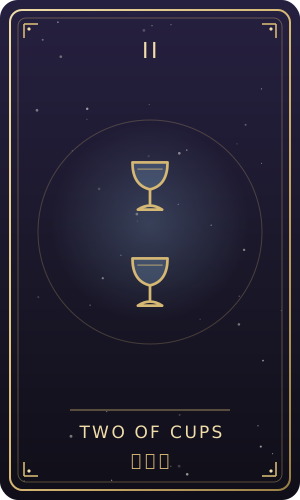
| Advice | Two of Cups | Upright |
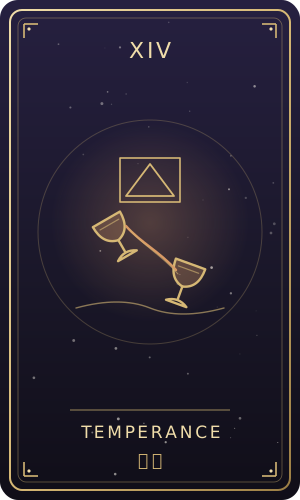
| Likely Outcome | Temperance | Upright |
Step 4: Read Each Card in Its Position
Use a simple formula: what the position asks + the card's core meaning + the querent's situation = one sentence. Don't recite the meaning; let the card answer the position.
- Present, Five of Cups. A cloaked figure stares at three spilled cups. Mia's attention is fixed on what's lost: fewer messages, an awkward evening. Yet two cups still stand behind the figure. Years of friendship remain, and Jess has never said she wants distance.
- Challenge, Two of Swords. A blindfolded woman holds two crossed swords. Both friends have chosen silence, and Mia, afraid of saying the wrong thing, has stopped reaching out. The card asks bluntly: is the silence protecting the friendship, or protecting her from discomfort?
- Hidden Influence, Six of Cups reversed. Upright, this is sweet memories. Reversed, it's being stuck in the past and idealizing it. Mia may be measuring the friendship against their university days, and bringing up old stories hints at a wish to go back.
- Advice, Two of Cups. Two people face each other and exchange cups. The advice is an equal, honest, one-on-one conversation rather than testing the waters in a group chat.
- Likely Outcome, Temperance. An angel pours water slowly between two cups. On the current path, the friendship can find a new balance: not a return to how it was, but a mix that suits who they both are now. It takes patience, not one big fix.
Step 5: Look at the Whole Picture
After the single cards, step back. The overview often shows a storyline no single card does:
| What to check | In this reading | What it may mean |
|---|---|---|
| Suits and elements | Three Cups, one Sword, no Wands or Pentacles | The theme is emotional (Water). The lone Sword sits in Challenge: the block is in thoughts and communication. No Wands echoes "each waiting for the other to move." |
| Major Arcana ratio | 1 of 5 | Mostly everyday matters within Mia's control. The one Major sits in the outcome, naming the long-term lesson: balance. |
| Reversals | One, in Hidden Influence | The snag is out of sight: a filter of memory. |
| Repeated numbers | Two Twos; Five and Six of Cups in sequence | Two is balance and choice between two people. Five to Six moves from loss toward memory. |
The two Twos are the heart of it. The Two of Swords is blindfolded with arms crossed; the Two of Cups faces its partner and shares. Same number, opposite postures, and that is the storyline: from guarding to exchanging. Brush up on the rules in The Four Suits and Number Symbolism. On ORAE, the Expert reading depth lists element, number and Major Arcana analysis, which is handy to compare with your own notes afterwards.
Step 6: Synthesize a Story and Advice
Try answering three questions: What's happening? Why is it stuck? What can I do? Mia's reading might become:
You're focused on what this friendship has lost (Five of Cups), but what's really stalling it is that neither of you is speaking (Two of Swords). You may be holding the friendship up against your university years (Six of Cups reversed), which makes today's distance sting more. The cards suggest inviting Jess to an honest one-on-one talk (Two of Cups), not to rebuild the past, but to slowly find a rhythm that works for both of you now (Temperance).
Then turn the advice into actions:
- This week, send one simple message with no hidden test in it and suggest coffee, just the two of you.
- Open with your own feelings ("I've felt a bit off since the last get-together") rather than "Are you avoiding me?"
- Adjust expectations: meeting once a month and sharing news now and then is still a good friendship.
Remember tarot's limits too. The cards can't confirm what Jess is thinking; asking her kindly is the most direct route. To get better at linking cards, read Six Ways to Link Cards Into a Story and Reading Card Combinations.
Step 7: Record It and Review Later
Most reading skill grows in review. Note the date, question, spread and cards, a one-sentence summary, the action you plan and how you felt. Two to four weeks later, answer three questions: Which card matched what happened most closely? What did I miss or rush past? Did I act on the advice, and what followed?
When you're signed in on ORAE, every reading is saved to your history. On the result page you can use "Save note" or "Add to journal" with mood tags. For a full method, see How to Keep a Tarot Journal.
Four Common Mistakes, and What to Do Next
- Reading only the outcome card. It shows where the current path leads; Advice and Challenge are often more useful.
- Reciting meanings instead of answering the question. Every sentence should come back to "what does this mean for my question?"
- Skipping the overview. Suits, Majors and numbers often carry the main plot.
- Treating the cards as a verdict. Tarot is a thinking tool, not a guarantee. For health, legal or financial decisions, rely on professional advice.
Your first full reading may well take half an hour, and that's normal; it gets faster. If the meanings still feel shaky, start with learning all 78 cards in four weeks, or build one skill at a time with ten tarot practice exercises. When you're ready, try a free online tarot reading with a question of your own. ORAE is free, needs no account and uses no AI: interpretations come from fixed rules and hand-written meanings, so the same card in the same position always reads the same way, which makes it a steady reference for your practice.
FAQ
What are the steps of a tarot reading?
Seven steps work well: clarify the question, choose a spread, shuffle and draw, read each card in its position, look at the overall elements and numbers, synthesize a story and advice, then record the reading and review it a few weeks later.
Which spread should a beginner use for a first full reading?
Start with one card or three, such as Past · Present · Future. Move on to the Five Card Deep Dive once you are comfortable, since its Challenge and Hidden Influence positions ask for more synthesis.
Should I read the individual cards or the overall pattern first?
Either order works. This guide reads each card and then steps back, while some readers glance at suits and Majors first. What matters is doing both and bringing them together at the end.
What if I draw a card I do not understand?
Do not redraw. Describe what the figure in the image is doing, go back to the question the position asks, and only then check the card page to compare your reading with the written meaning.
Can I use these seven steps with an online reading?
Yes. On ORAE, picking a theme, writing your question and choosing a spread covers steps one to three. When the result appears, read it yourself first, compare it with the interpretation, then save a note or journal entry.
Try a reading on ORAE
Free, no sign-up, no AI: fixed, transparent interpretation rules.